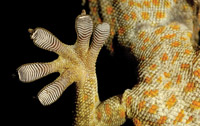
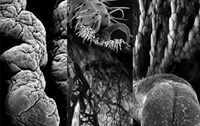
Lecture and showing of material science and visualization by award winning chemist and documentary director and filmmaker. University of Applied Arts, Vienna.
Location: Fowler A103B
Alfred Vendl is a specialist in making hidden scientific phenomena visible. He works at micro-and nano-scale, bringing invisible procedures to human perception through film. His cinematography in the series "Nature Tech" won a 2008 EMMY Award.
Patricia Olynyk's work investigates the tenuous relationships between art, culture, science, and the environment. Often using microscopy and biomedical imaging technologies, her work calls on viewers to expand their awareness of the worlds they inhabit - whether those worlds are their own bodies or the spaces that surround them.
In the 1980s, poetic and philosophical implications of the serious, scientific search for extraterrestrial intelligence (SETI) helped to inspire pioneering work in a new field of molecular biology art. This presentation will draw together ideas about radio, lasers, genetics, sculpture, mathematics, natural language, history and the nature of discovery itself.
The Role of Nature and Nurture in the Development and Intergenerational Transmission of Maladaptive Behavior: A Comparative Perspective
Professor Dario Maestripieri
Department of Comparative Human Development, Evolutionary Biology, Neurobiology and Psychiatry
University of Chicago
Location: 2125 Rolfe Hall
Abstract
Comparative research with animals can help us understand the relative contributions of genetic and environmental factors to the development and intergenerational transmission of maladaptive psychological processes and behavior. Cross-fostering experiments and the use of the candidate gene approach in studies of rhesus monkeys have allowed us to examine the relative contributions of genetic variation in brain serotonergic function and early traumatic experience in the intergenerational transmission of abusive parenting. We have also elucidated some of the neurobiological mechanisms through which genetic and experiential factors affect the development of maladaptive emotional responses and behavior.
A roundtable discussion of the recently published paper: Reconstructing Indian Population History (Reich et al. 2009).
India has been underrepresented in genome-wide surveys of human variation. We analyze 25 diverse groups in India to provide strong evidence for two ancient populations, genetically divergent, that are ancestral to most Indians today. (Reich et al. 2009)
Microwave International New Media Arts Festival 2009
Hong Kong
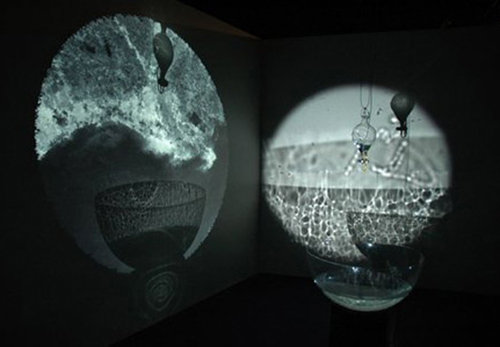
Four water bowls reflect different aspects of water related to the collective, global human condition. Some of the most common metaphorical associations of water -- such as the reflection of the moon, a drop of water, the sound of water, and oil and water -- are revisited through the use of some of the latest scientific observations. Moon and Sound are locally interactive and Drop and Oil are interactive both locally and remotely, emphasizing the global connectivity of water / human systems, beyond borders.
Conference: November 15th, 11:00-16:00 at the Hong Kong Heritage Discovery Center Lecture Hall
Eco_Visualization: Combining Art and Technology to reduce energy consumption
Keynote lecture: November 15th, 14:00-15:00
Victoria Vesna: "Sound Thinking in Art Making: Ghosts, Quantum Tunnel & Butterflies"
Grand Opening: November 13, 2009 18:30 - 19:30
Exhibition Hall, Low Block, Hong Kong City Hall
NATALIE JEREMIJENKO: "Climate Crisis, Food Crisis or Crisis of Agency?" Lecture
05 MAY 2009
EDA, BROAD ART CENTER
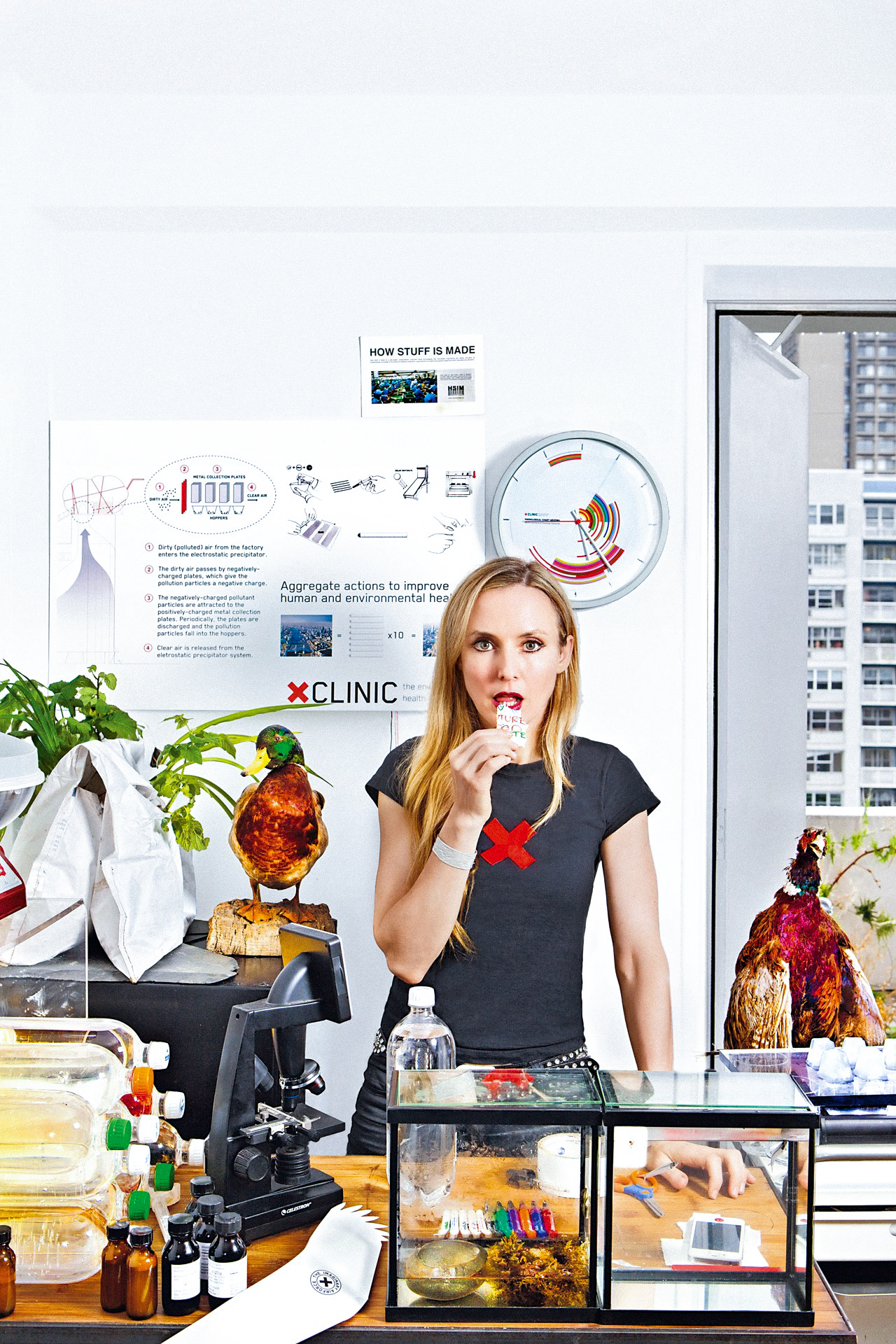
Natalie Jeremijenko is an artist, inventor, and engineer with the mission to reclaim technology from idealized, abstract concepts and to apply it to the messy complexities of the real world, often with disquieting results.
Co-hosted with the Department of Design|Media Arts, “Climate Crisis, Food Crisis or Crisis of Agency?” discussed the technological opportunities for structuring participation in the contemporary environmental movement.
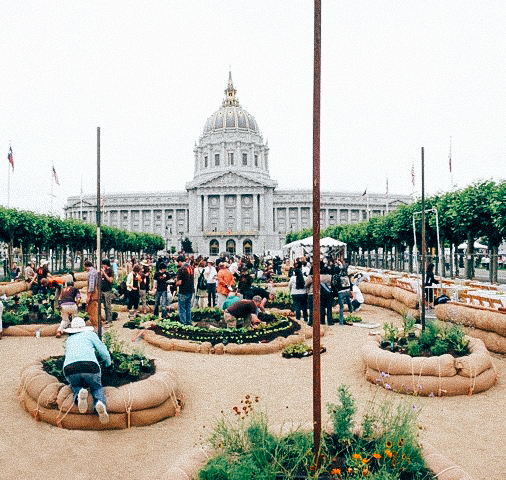
Franceschini is an artist and educator. She founded Futurefarmers in 1995 to bring together multidisciplinary practitioners to create new work. She is currently teaching media theory and practice courses at Stanford University and the San Francisco Art Institute.
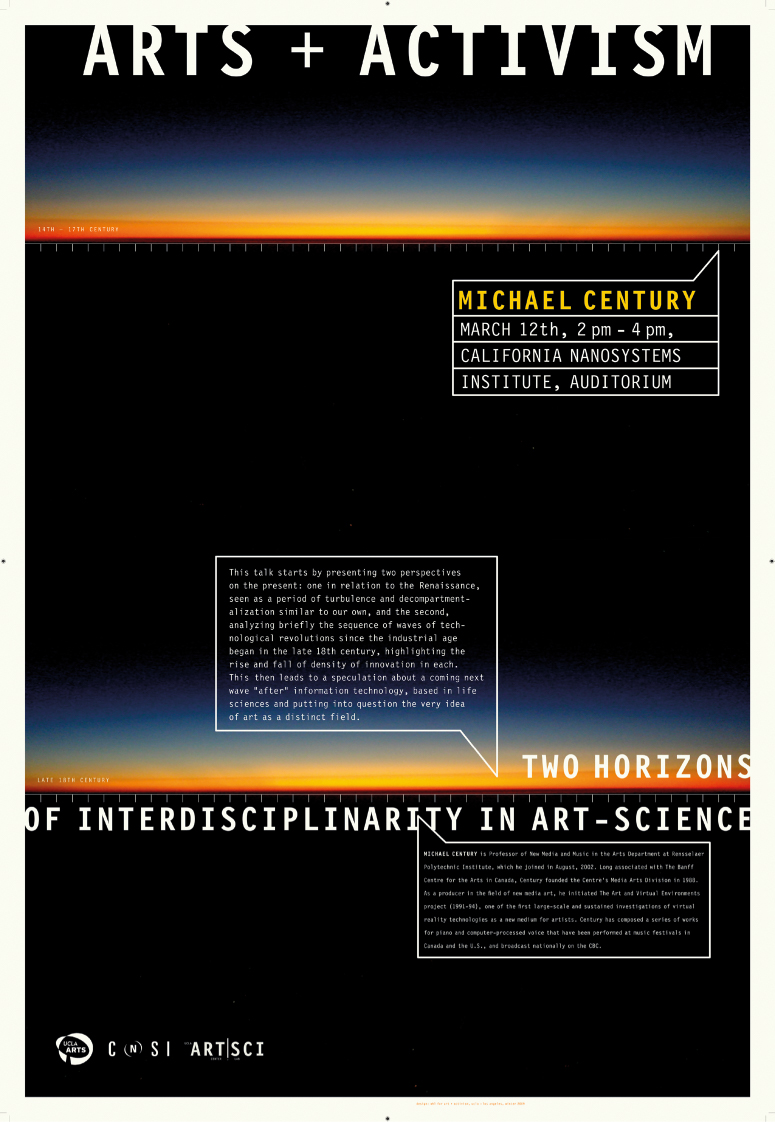
MICHAEL CENTURY: "Twin Horizons of Interdisciplinary in Art-Science" Lecture
12 MARCH 2009
EDA, UCLA BROAD ART CENTER
Michael Century is Professor of New media and Music in the Arts Department at Rensselaer Polytechnic Institute, which he joined in August, 2002. Long associated with The Banff Centre for the Arts in Canada, Century founded the Centre’s Media Arts Division in 1988. As a producer in the field of new media art, he initiated The Art and Virtual Environments project (1991-94), one of the first large-scale and sustained investigations of virtual reality technologies as a new medium for artists.
His talk presented two perspectives on the present: one in relation to the Renaissance, seen as a period of turbulence and decompartmentalization similar to our own, and the second, analyzing briefly the sequence of waves of technological revolutions since the industrial age began in the late 18th century, highlighting the rise and fall of density of innovation in each. This led to a discussion about a coming next wave “after” information technology, based in life sciences and putting into question the very idea of art as a distinct field.
Location: UCLA California NanoSystems Institute Auditorium
Co-founded in 2003 by the international non-profit Slow Food and the Italian regions of Piedmont and Emilia-Romagna, the school’s innovative approach is to create a new understanding of gastronomy, linking the act of eating with the act of producing, along with all the phases in between. Four programs at two Italian campuses follow a multidisciplinary learning model, merging science with humanities, sensory training with communications, classroom study with field seminars. The Slow Food movement was founded by Carlo Petrini in Italy to combat fast food. It claims to preserve the cultural cuisine and the associated food plants and seeds, domestic animals, and farming within an ecoregion. It was the first established part of the broader Slow movement. The movement has since expanded globally to over 83,000 members in 122 countries.