Thursday, 13 November 2014 - 10:00am to Friday, 14 November 2014 - 5:00pm
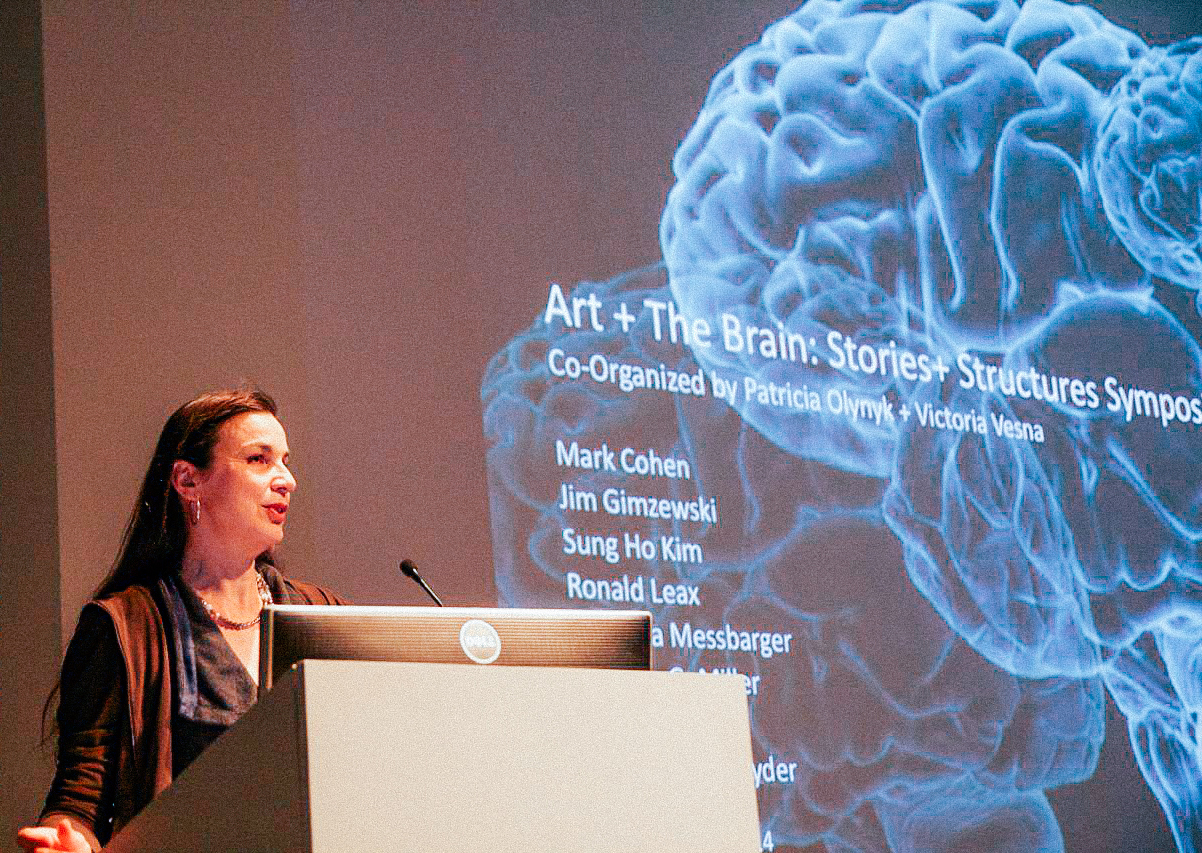
Art + the Brain: Stories and Structures symposium
Co-organized by Patricia Olynyk (Washington University, St. Louis) and Victoria Vesna (University of California, Los Angeles), Art + the Brain: Stories and Structures explored the complex histories, practices, and interconnections between art, architecture, medicine and neuroscience with the human brain as a central focus.
From the metaphorical potency of anatomical art to stories that probe decision circuits and mirror neurons in monkeys, to revolutionary biological visualizations of the dynamics of cellular and sub-cellular structures, . six speakers from Washington University’s Art|Sci Fellows Program joined faculty and students from UCLA for a lively exchange of ideas over the course of a one and a half day symposium.
Co-sponsored by the UCLA Art|Sci Center + Lab and Washington University’s Skandalaris Center for Entrepreneurship and Sam Fox School of Design & Visual Arts, presenters include:
Sung Ho Kim / Ron Leax / Rebecca Messbarger / Kathy Miller / Patricia Olynyk / Larry Snyder / Mark Cohen / Jim Gimzewski / Victoria Vesna
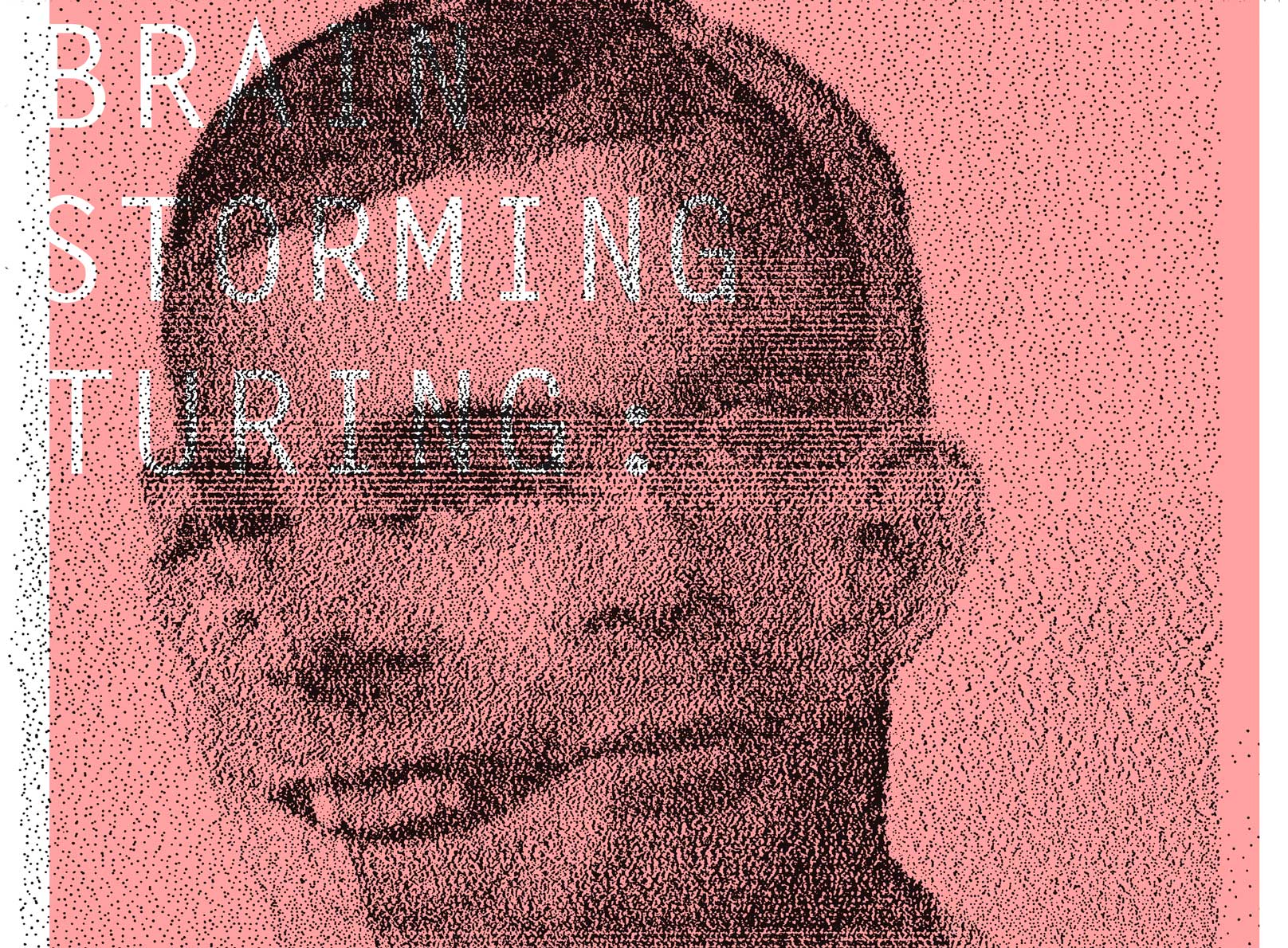
Brainstorming Turing: Celebrating Alan Turing + 25 Years of AI and Society Journal
100 years have passed since Alan Turing was born and we celebrate this historically important individual together with many organizations around the world. We look to show his eccentric creativity in addition to reminding all of the huge contribution he made to computation and artificial intelligence. Short talks by computer / neuro / nano scientists and humanists are accompanied by artists inspired by Turing’s legacy and persona. Additionally, students from UCLA will participate with their ideas of how Turing informs and inspires their work and lives in this time when social networking, robotics and automatic brains are part of daily life.
2012 also marks 25 years since the establishment of AI & Society journal that owes its formation to Turing’s legacy. The Art | Sci center is partnering with this interdisciplinary publication to honor Turing and all those who have contributed over the years. A special issue based on the symposium is planned.
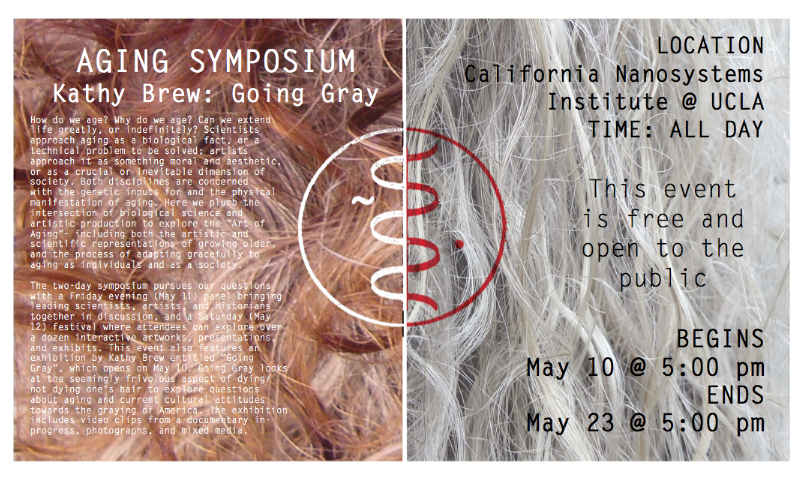
Genetics + Aging Symposium
Hosted and organized by the Institute for Society and Genetics.
How do we age? Why do we age? Can we extend life greatly, or indefinitely? Scientists approach aging as a biological fact, or a technical problem to be solved; artists approach it as something moral and aesthetic, or as a crucial or inevitable dimension of society. Both disciplines are concerned with the genetic inputs for and the physical manifestation of aging. Here we plumb the intersection of biological science and artistic production to explore the “Art of Aging”– including both the artistic and scientific representations of growing older, and the process of adapting gracefully to aging as individuals and as a society.
The two-day symposium pursues our questions with a Friday evening (May 11) panel bringing leading scientists, artists, and historians together in discussion, and a Saturday (May 12) festival where attendees can explore over a dozen interactive artworks, presentations, and exhibits. This event also features an exhibition by Kathy Brew entitled "Going Gray", which opens on May 10. Going Gray looks at the seemingly frivolous aspect of dying/not dying one’s hair to explore questions about aging and current cultural attitudes towards the graying of America. The exhibition includes video clips from a documentary in-progress, photographs, and mixed media.
Time:
All day
Location: California NanoSystems Institute @ UCLA
This event is free and open to the public. For more information and to register, please click here.
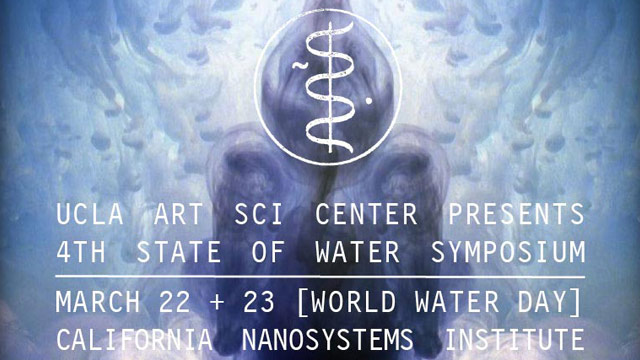
In connection with the 4th State of Water: From Macro to Micro exhibition at CoCA Torun, UCLA is hosting the 4th State of Water Symposium on March 22 (World Water Day) and March 23, 2012 at the California NanoSystems Institute. The opening keynotes will be given by renowned science writer Dr. Philip Ball, author of “Why Water is Weird” and “H20: A Biography of Water”, and Gerald Pollack from the Department of Bioengineering at the University of Washington, speaking on the “Fourth Phase of Water”.
The event will additionally feature a joint online session powered by Waterwheel, an interactive, collaborative platform for sharing media and ideas, performance and presentation. The Art|Sci Center invites all artists and scientists to participate in an OPEN CALL for a collaborative 15 minute performance on Tap. For more information on Waterwheel and Tap, please click here.
Art and Science Symposium | Microwave Festival 2011 藝術及科學研討會 Date 日期 29.10 {Sat六} Time 時間 14:00 - 17:00 Venue 地點 Lecture Theatre 1 (M3017), Level 3, Run Run Shaw Creative Media Centre, 18 Tat Hong Avenue, Kowloon Tong 九龍塘歌和老街18號邵逸夫創意媒體中心L3演講廳1(M3107)
SPEAKERS 講者:講者:
I. Irène Hediger 艾蓮.海迪格 Co-Director and curator of the Swiss artists-in-labs program, Head of Sino-Swiss and Indo-Swiss Residency Exchange Project, Institute for Cultural Studies in the Arts ICS, Zurich University of the Arts (ZhdK), Zürich 瑞士蘇黎世藝術大學「實驗室藝術家」計劃聯合總監及策展人 Think Art – Act Science 思考藝術 - 科學行徑
II. Jill Scott 吉爾.史葛 Co-Director of the Swiss artists-in-labs Program, Professor for Research in the Institute Cultural for Studies in the Arts, Zurich University of the Arts (ZhdK), Zürich 瑞士蘇黎世藝術大學藝術文化研究學院研究教授,「實驗室藝術家」計劃聯合總監 Neuromedia 神經媒介
III. Victoria Vesna 維多利亞.韋斯娜 Professor at Parsons The New School for Design, New York, and Founder/Director of the Art | Sci Center + Lab, UCLA School of the Arts and California Nanosystems Institute (CNSI) 紐約帕森設計學院教授,加州大學洛杉磯分校藝術及科學中心創辦人及主席 Treading the Art|Sci path: Being in Between 藝術|科學之路:擲界
IV. Peter Weibel 彼得.韋伯 Chairman and CEO of the ZKM/Centre for Art and Media, Karlsruhe, Germany 德國卡爾斯魯厄ZKM媒體藝術中心主席及行政總裁 The Future of Media: From Visual Media to Social Media 預言媒體未來: 由視覺媒體到社交媒體
A symposium on how conceptions of the skeleton have evolved alongside the increasing ability of science to represent the body. Medicine, critical theory, anthropology, and art history will be represented.
Co-sponsored by the Ph.D. Program in Art History
Friday, April 30, 1:00 PM
Rooms 9206 / 9207
No reservations. First come, first seated
Social ArtSci Networked Discourse (SAND) is a new paradigm of teaching as a social network and discourse to address issues that require multi-faceted considerations and point of view. No one can claim authority alone but Professors can design a conceptual platform and engage students who teach what they learn. They become part of an international social network of professional artists and scientists who engage in research that addresses issues raised in class. Language barriers are crossed by having international students who are bi-lingual act as discourse leaders / teachers while bringing back to class different points of view. Time zone and schedule problems are addressed by having local group dialogues recorded and added to the resource.
Organized by Machiko Kusahara, Art|Sci Visiting Research Scholar and Waseda University, Japan
Sponsored by CREST program of Japan Science and Technology Agency, UCLA Art|Sci Center, and the UCLA Department of Design|Media Arts.
Thu, Feb. 18, Broad Art Center EDA, room 1250
5:30 - 7:00 PM Keynote speaker and lectures, Broad Art Center, EDA, Room 1250
7:00 - 8:00 PM Exhibition Opening Reception, Broad Art Center, 2nd floor patio
Symposium opening with Maywa Denki presentation by Novmichi Tosa
Friday, Feb. 19, 10 am-5 pm C(N)SI Auditorium and Art|Sci gallery
Lectures on Art, Science, and Technology. A special presentation by Novmichi Tosa, followed by afternoon lectures on Device Art, and a panel discussion.
Symposium: Device Art explores new ways of bridging art, design, technology, science and entertainment by using both latest innovations and everyday technology. The two day symposium will include: lectures by academia from Japan and UCLA; performances by artists Novmichi Tosa, Kazuhiko Hachiya, and others; and an exhibition of intriguing gadgets that exemplify Device Art. Exhibitions at EDA Bermant Gallery runs February 18 - February 24, 2010 and the student exhibition in Art|Sci gallery runs through February 18 - March 4, 2010. Hours of exhibition to be announced.
All day parking is available in Lot 3 for the Broad Art Center and Lot 9 for C(N)SI and is $10 per day.
Exhibition at EDA runs Feb. 18-24; Art|Sci gallery Feb 19-March 4
Friday 4-8pm: Symposium
Saturday 10am-3pm: Workshop and Exhibition
a symposium exploring new forms of biological and engineering research beyond the university and the corporation and an exhibition and bio-faire for exploring new forms of participation, open science and do it yourself biology.
With:
Gaymon Bennet (SynBERC and Ars-Synthetica.net, Berkley,)
Jason Bobe (DIYBio.org and The Personal Genome Project, Cambridge, MA)
Roger Brent (Fred Hutchison Cancer Center, Seattle)
Phil Lukeman (Cal Poly Pomona)
Hugh Rienhoff (MyDaughtersDNA.org, Berkeley)
Meredith Paterson (Hacker, Belgium)
Victoria Vesna (UCLA Art|Science Center, UCLA Design Media Arts, Los Angeles)
Moderated by:
Christopher Kelty (UCLA Center for Society and Genetics, Los Angeles)
A symposium exploring new forms of public participation in biological research, raising questions and cultivating ideas about how life could and should be studied. Panelists will address issues including do-it-yourself biology, open source science, at home medical genetics, bio-art, and novel ethical engagements with science at the cutting edge. Event schedule includes: Friday, a panelist discussion with artists, scientists and normal people; Saturday, workshops and an open-house exhibition throughout.
Today the life sciences are blooming with possibility. The Human Genome Project is at an end, but the answers it promised remain elusive. Older models of gene action and genetic determinism are crumbling, even as huge pharmaceutical corporations and federally funded university laboratories—Big Bio—continue to drive the research agenda. But just past the frontiers of law and order, a handful of outsiders are trying to remake biology in radical new ways. Synthethetic Biology, DIY Biology, recreational genetics, nanobiotechnology, open source science, patient-driven clinical research, bio-art all in their own ways are challenging Big Bio, and inviting you, the public, to participate.
But can “outlaw biology” really have an effect? What can a band of do-it-yourself biologists teaching themselves to do gel electrophoresis at home really accomplish? Can synthetic and nano-bio engineering cure malaria, as they claim, or just make yogurt glow? Who is “the public” and is it really involved in a meaningful way? What’s good—or bad—about customizing genetic research to explore forgotten diseases
or rare disorders? Can the model that made open source software a success also work in biology? Can artists teach biologists a few things about life, or biologists teach artists something about making? When biology is outlawed, will only outlaws do biology?
Citizen Science | DIY Biology | Nano Hacking | At-Home Clinical Research | Recreational Genetics | Synthetic Biology | Open Source Science | Ars Synthetica | Genetic Art
Third Annual Global Symposium on NanoBioTechnology
CNSI Auditorium, UCLA
The 3rd Annual Symposium on Nanobiotechnology will be held in the auditorium of the California NanoSystems Institute (CNSI) on the UCLA campus. The theme this year is "New directions in NanoHealth." Presentations will focus on diagnostics, drug therapies and delivery systems, nanosafety, and other related areas of nanomedical research. Special emphasis will be given to breakthrough discoveries from laboratories in Asia, North America and Europe.
The symposium will provide an international perspective on nanoscience and nanotechnology by featuring speakers from the Center for NanoBio Integration (CNBI) at the University of Tokyo , the CNSI at UCLA, the Nanomedical National Core Research Center at Yonsei University and the Technical University of Munich (TUM) and the Ludwig-Maximilians-University (LMU).
Visit the website for additional information about registration, speakers and agenda!
Registration is free, but space is limited! Register now!
The symposium of cryo-electron microscopy will be very unique in that we are highlighting the latest technology developments that are key to nanomedicine applications. The program is open to students, faculty and industrial researchers in hopes that their expertise and enthusiasm will help develop these possible applications and further the ideas in nano related research.