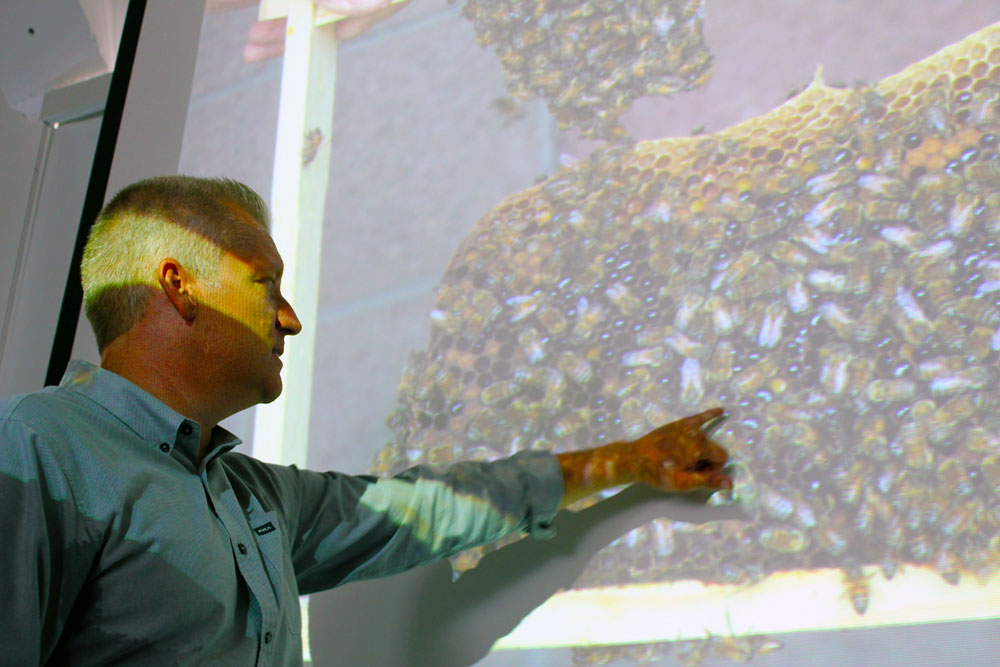
Director Victoria Vesna opened her honors class, Biotech & Art to visitors for a workshop led by visiting artist Jason Fahrion, who presented his art projects with insects as biological factories.
Students and visiting scholars examined the silkworm life cycle and look at potential medical and artistic applications of the substances that silkworms produce along with the silk. They also learned about Fahrion’s work with honeybees and the local production of honey.
MICK LORUSSO+ALIA GHONEUM Workshop: Nanodiamonds in the Treatment of Cancer
Thursday, April 10th // 4-6:50 p.m.
Broad Art Center, Room 5240
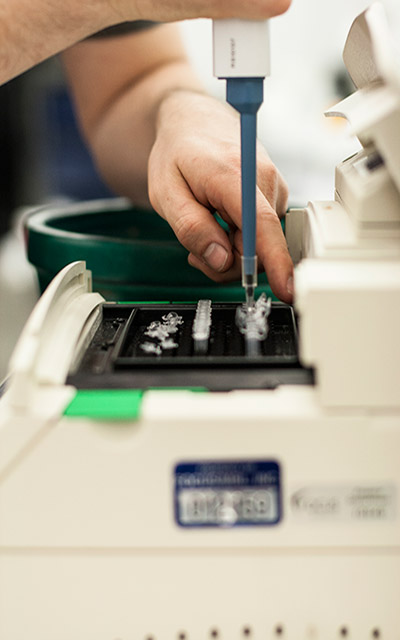
In this workshop participants learn about recent research on nanodiamonds in the treatment of cancer. They will create scaled-up simulations of experiments that Alia Ghoneum has conducted with nanodiamonds on metastatic cells.
This Valentine's Day in Victoria Vesna's honors class -- Biotech + Art -- we'll explore with Christina Agapakis the history, biology, and chemistry of aphrodisiacs, from medieval nutritional handbooks to modern biochemistry. How do foods influence our moods and stimulate our senses? Are oysters romantic placebos or vectors for arousing micronutrients? Exploring aphrodisiacs can tell us a lot about how we understand nutrition and health as well as the aesthetic and chemical experience of foods.
RSVP essential!
Broad Art Center 240 Charles E. Young Drive, Room 5240 Los Angeles, CA 90095
5-7pm
Parking is $11 all day, and is available in structure 3, adjacent to the building. For more information, call 310.825.9007.
In this workshop we’ll explore the genetic basis of taste perception, specifically the inherited ability to taste a bitter chemical. Throughout the process we will examine the tools and techniques used by genetics labs and, increasingly, hobbyists and biohackers. By physically testing ourselves for this particular genotype we can gain the skills to analyze all of our genes, increasing our ownership of our personal data and a new way to explore life in general.
Thursday, January 24th, 2013
5-7pm
Broad Art Center
240 Charles E. Young Drive, Room 5240
Los Angeles, CA 90095
Parking is $11 all day, and is available in structure 3, adjacent to the building. For more information, call 310.825.9007.
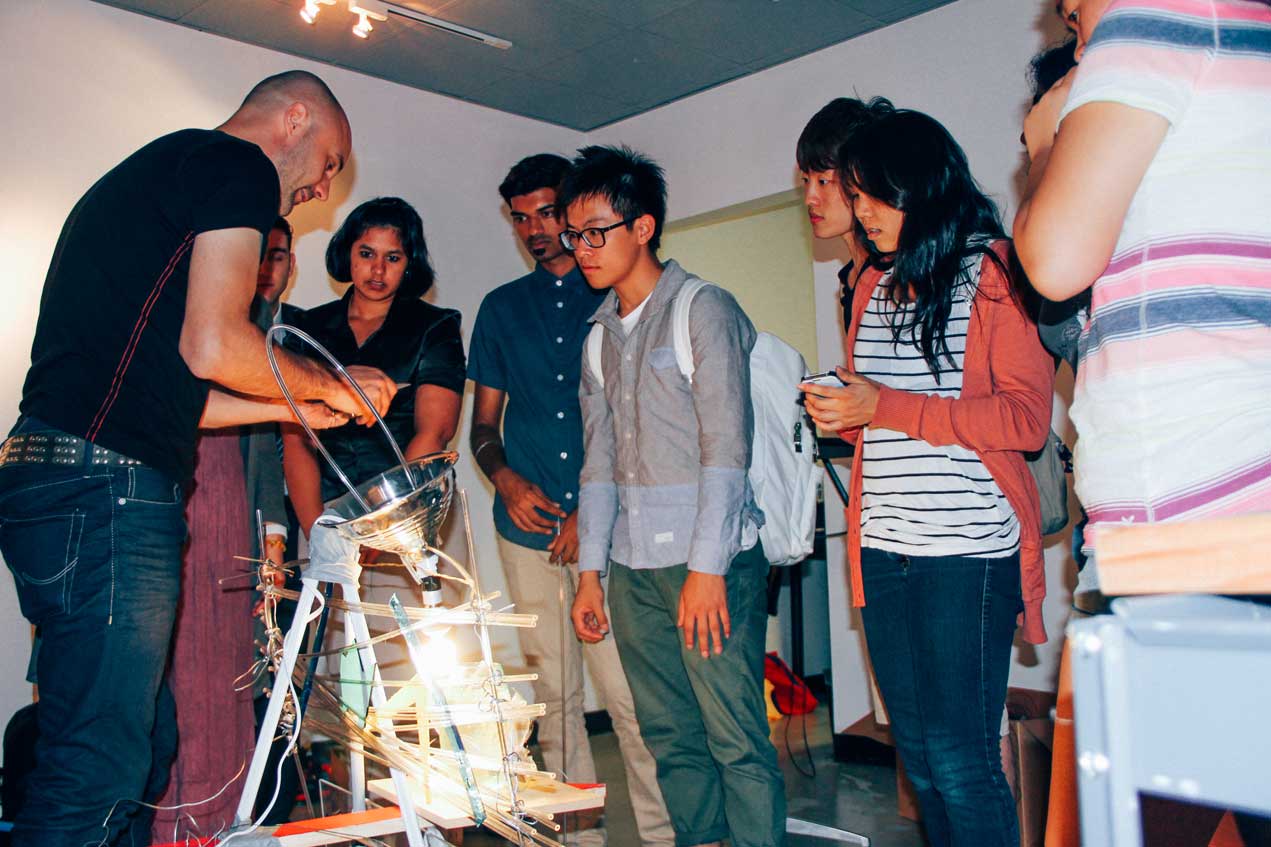
Build-Your-Own Bioreactor was a hands on workshop where participants learned how to build their own green algae bioreactor. They built contraptions that boost algae growth using simple, and mainly recycled and re-used materials such as aeration systems, lights and glassware.
Accompanying the workshop was a lecture on Biomodd, a multifaceted socially engaged art installation that finds meaningful relationships between biology, computers and people. On the most basic level, Biomodd creates symbiotic relationships between plants and computers, and ignites conversations among the community around them. The first version of Biomodd started in Athens, Ohio in 2007, and has since travelled to the Philippines, Slovenia, New Zealand, Belgium and the Netherlands. In each location the project got its own unique outcome. A new version is currently being developed by an international community at the New York Hall of Science in Queens, NY.
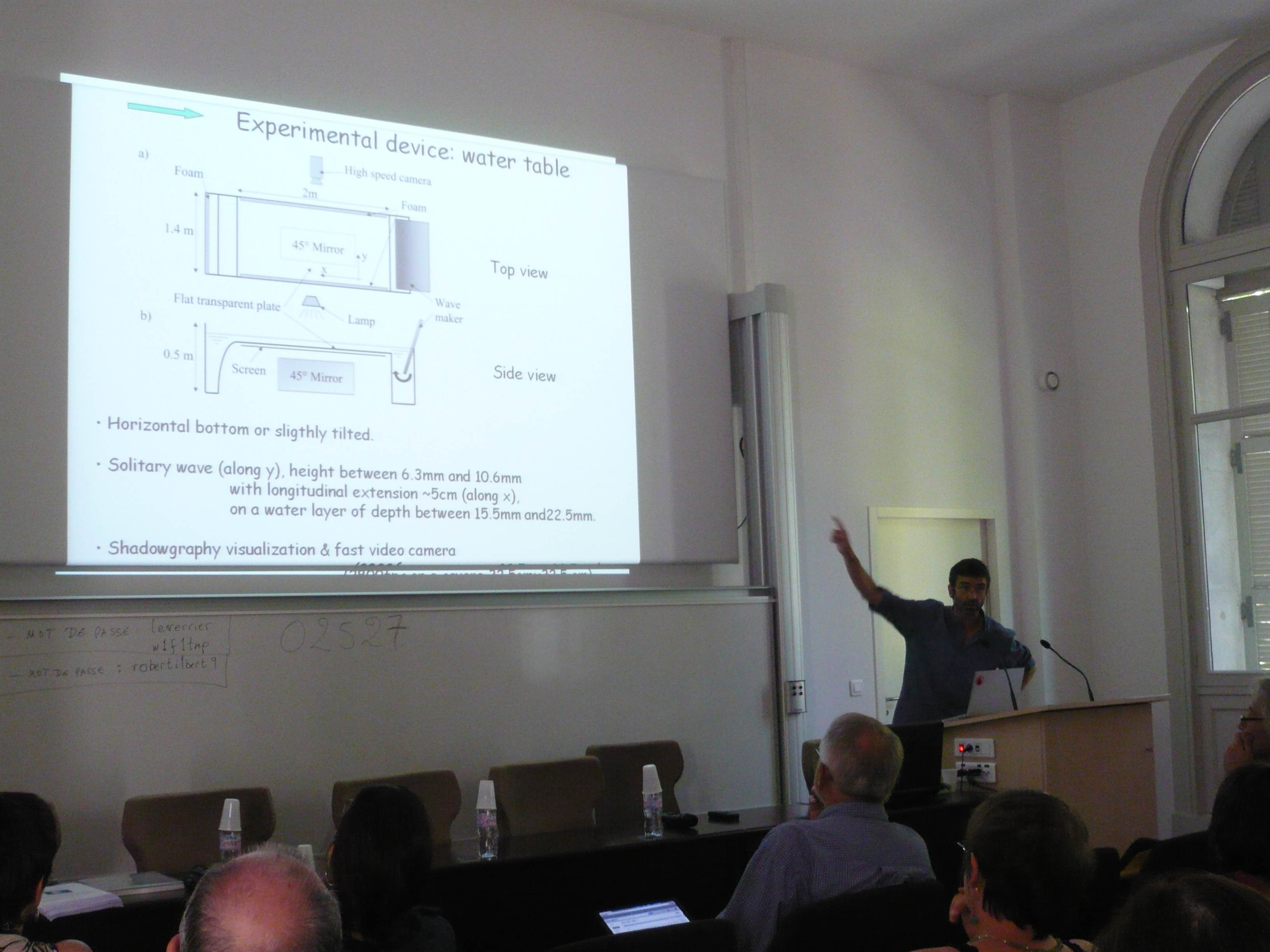
In the framework of the European project StudioLab, Leonardo/Olats, in collaboration with IMéRA, is organizing a two day workshop on the theme "Water is in the Air".
Missing or flooding, pure or polluted, water is at the core of many economical, social and political issues as well as cultural and symbolic ones. Water is a familiar component. However, numerous things remain unknown regarding its nature, its structure, how it changes state, its presence in the universe, that scientists and artists are challenging and exploring. This is the approach that the workshop Water is in the Air has decided to tackle.
Based on singular artistic and scientific projects involving water as case studies, in hard sciences as well as humanities, this workshop seeks to explore trans-disciplinary crossings. We will be seeking to deepen our understanding of how the large variety of art-science collaborations function today; examining the roadblocks to such collaborations and the new opportunities they provide. We also seek to develop ideas for innovative ways to work and engage with different kind of audiences and publics.
Among the participants : HeHe (Heiko Hansen & Helen Evans), Jean-Marc Chomaz, Nathalie Delprat, Monsieur Moo, Optofonica (Evelina Domnitch & Dmitry Gelfand), Ana Rewakowicz, Peter Richards, RIX-C (Rasa Smite & Raitis Smits), Javiera Tejerina-Risso, Patrice Le Gal, Harold Vasselin, Victoria Vesna, et Emmanuel Villermaux.
The workshop takes place at IMéRA, 2 place Le Verrier, 13004 Marseille
DIYbio is an organization that aims to help make biology a worthwhile pursuit for citizen scientists, amateur biologists, and DIY biological engineers who value openness and safety. This will require mechanisms for amateurs to increase their knowledge and skills, access to a community of experts, the development of a code of ethics, responsible oversight, and leadership on issues that are unique to doing biology outside of traditional professional settings.
About the event:
DIYbio is defined differently depending on who you talk to, so we'll be giving an overview on what it means to us and why we're excited about it. Applications include: re-purposing household appliances for the makings of lab equipment, using molecular gastronomy to expand your culinary repertoire, "domestic" microbiology with kombucha and kefir and setting up a synthetic biology lab in your garage to make your own modified bacteria. People will also get a chance to make their own potato plastic keepsake from ingredients you can find in the grocery store.
Friday 4-8pm: Symposium
Saturday 10am-3pm: Workshop and Exhibition
a symposium exploring new forms of biological and engineering research beyond the university and the corporation and an exhibition and bio-faire for exploring new forms of participation, open science and do it yourself biology.
With:
Gaymon Bennet (SynBERC and Ars-Synthetica.net, Berkley,)
Jason Bobe (DIYBio.org and The Personal Genome Project, Cambridge, MA)
Roger Brent (Fred Hutchison Cancer Center, Seattle)
Phil Lukeman (Cal Poly Pomona)
Hugh Rienhoff (MyDaughtersDNA.org, Berkeley)
Meredith Paterson (Hacker, Belgium)
Victoria Vesna (UCLA Art|Science Center, UCLA Design Media Arts, Los Angeles)
Moderated by:
Christopher Kelty (UCLA Center for Society and Genetics, Los Angeles)
A symposium exploring new forms of public participation in biological research, raising questions and cultivating ideas about how life could and should be studied. Panelists will address issues including do-it-yourself biology, open source science, at home medical genetics, bio-art, and novel ethical engagements with science at the cutting edge. Event schedule includes: Friday, a panelist discussion with artists, scientists and normal people; Saturday, workshops and an open-house exhibition throughout.
Today the life sciences are blooming with possibility. The Human Genome Project is at an end, but the answers it promised remain elusive. Older models of gene action and genetic determinism are crumbling, even as huge pharmaceutical corporations and federally funded university laboratories—Big Bio—continue to drive the research agenda. But just past the frontiers of law and order, a handful of outsiders are trying to remake biology in radical new ways. Synthethetic Biology, DIY Biology, recreational genetics, nanobiotechnology, open source science, patient-driven clinical research, bio-art all in their own ways are challenging Big Bio, and inviting you, the public, to participate.
But can “outlaw biology” really have an effect? What can a band of do-it-yourself biologists teaching themselves to do gel electrophoresis at home really accomplish? Can synthetic and nano-bio engineering cure malaria, as they claim, or just make yogurt glow? Who is “the public” and is it really involved in a meaningful way? What’s good—or bad—about customizing genetic research to explore forgotten diseases
or rare disorders? Can the model that made open source software a success also work in biology? Can artists teach biologists a few things about life, or biologists teach artists something about making? When biology is outlawed, will only outlaws do biology?
Citizen Science | DIY Biology | Nano Hacking | At-Home Clinical Research | Recreational Genetics | Synthetic Biology | Open Source Science | Ars Synthetica | Genetic Art
Join a group of artists from New York visiting Los Angeles for an exhibition downtown at the Outpost for Contemporary Art.
A discussion on participatory mapping with Lucy Hg from The League of Imaginary Scientists, media artists Andrea Polli and Chuck Varga, and xtine.
X, Y, Z, and U is an exhibition and series of discussions and workshops featuring the mapping projects of artists whose creative practices resemble field research and scientists who use DIY tactics and creative visualization to map scientific information. The exhibition and related community-based activities are scheduled throughout June at Outpost for Contemporary Art, and organized in partnership with apexart and The League of Imaginary Scientists.
Ecological concepts of continuity and interdependence are renegade forces. They not only transform existing patterns of material consumption and production, they destabilize social values and disrupt aesthetic conventions. Even the notion of beauty is overhauled by the ecological mandate to embrace all aspects of the life cycle – decay as well as growth. Artists who demonstrate radical beauty are renegade aestheticists. They demonstrate that the greening of society depends as much upon revising human values as reforming human behaviors.