Satinder Gil, Cambridge, UK, Emily Harris & John Halpern of I.C.A.I, Tuning Fork, NY, Victoria Vesna, Walter Gekelman & Haley Marks, UCLA
[SUN]Flower Plasma
art + physics = energy
Please join Satinder Gil, LASER, Cambridge, UK, Emily Harris & John Halpern of I.C.A.I, Tuning Fork, NY as they explore this art sci collaboratorative project with Victoria Vesna, Walter Gekelman, Haley Marks about the art sci collaborative process.
Friday, November 8th, 2024
10am PST, 1pm EDT, 19h CET
[SUN]Flower Plasma installation premiered August 31, 2024 in Elements! in Art and Tech exhibition, organized by Harvestworks Digital Media Arts Center as part of their Art and Technology Program on Governors Island.
Funded in part by NYSCA.
Vimeo Link:
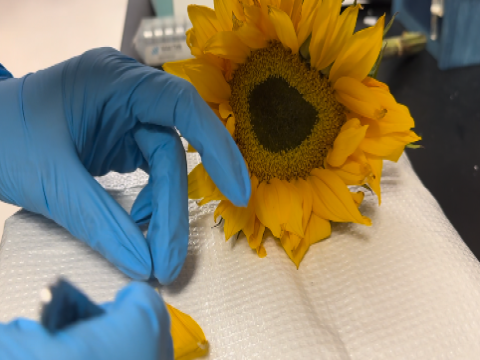
Building on the “Art + Physics = Energy” explorations, [SUN] Flower Plasma delves into the ecological and geopolitical significance of sunflowers and the scientific importance of Alfvén waves. The installation features sound and images from the Large Plasma Device, solar wind data from NASA’s Parker Solar Probe, and natural recordings, offering an immersive meditation on solar energy and the cycle of creation and destruction. The sound was mixed by Kevin Ramsay at Harvestworks NY, adding an additional layer of depth to the experience.
This art sci project resulted from years of dialogue between Victoria Vesna and plasma physicist Dr. Walter Gekelman, an expert in Alfvén waves who built one of the largest basic plasma machines in the world. In addition to gathering materials from the plasma lab, Victoria worked together with biomedical engineer Dr. Haley Marks to image sunflower parts, revealing their remarkable microscopic structures resembling the sun.
Discover more on: https://sunflowerplasma.com
This LASER is connected to the exhibition opening of Pigeon Art Studio & Animal Creativity at the UCLA Art Sc gallery at CNSI – developed by Aaron Blaisdell, UCLA Psychology Professor and Chair of the Behavioral Neuroscience. His lab at UCLA presents an exhibit featuring pigeons creating digital art, exploring the reasons and processes behind it, and inviting insights into human artistry.
Guest responder is neuroscientist and sci artist Siddharth Ramakrishan who will discuss animal consciousness in labs.
Chaired by: Victoria Vesna
ON SITE at UCLA ArtSci Gallery
Dr. Blaisdell is a Psychology Professor and Chair of the Behavioral Neuroscience area at UCLA, overseeing the Comparative Cognition Lab and the Pigeon Art Project. As a member of the UCLA Brain Research Institute, the UCLA Integrative Center for Learning & Memory, and the UCLA Evolutionary Medicine program, Dr. Blaisdell has an extensive academic background with a BA in Anthropology from SUNY Stony Brook, an MS in Anthropology from Kent State University, a Ph.D. in Behavioral Neuroscience from SUNY Binghamton, and two years of NIH-funded postdoctoral training at Tufts University.
Siddharth Ramakrishnan, PhD., a Neuroscientist, is an Assistant Professor of Biology and the Jennie M. Caruthers Chair in Neuroscience at the University of Puget Sound. His research interests span the field of developmental biology, neuroendocrinology and sensory-motor integration. He is a recent recipient of the NSF CAREER award for early career scientists to explore modulation of the reproductive axis in the brain by endocrine disruptors. As a research scientist at Columbia University, he designed microchips to record from brain cells and used proteins to create bio-batteries and biosensors. As a postdoctoral researcher at UCLA (2006-2009) he studied the development and physiology of reproductive neurons in the zebrafish brain. His previous research addressed pattern-generating networks in snails and how they were modulated to elicit various behaviors.
featuring Hannah Landecker
responder Patricia Olynyk
Chaired by Victoria Vesna
Location: UCLA CNSI, 5th Floor, Presentation Room
This LASER is connected to the exhibition opening at the UCLA ArtSci gallery at CNSI – developed by Professor Hannah Landecker with her students: "Hot Cling, Shear Magic, and the Mouthfeel of Capitalism:
Images From the History of Ultra Processed Foods" ABOUT THE EXHIBITION: http://artsci.ucla.edu/node/1709
Guest responder is artist Patricia Olynyk, who is a fellow of the UCLA Art Sci Medicine & Media Arts initiative: https://medicineandmediaarts.com
Hannah Landecker, with a Ph.D. in Science and Technology Studies from MIT and a B.Sc. in Cell and Developmental Biology from the University of British Columbia, uses the tools of history and social science to study contemporary developments in the life sciences, and their historical taproots in the twentieth century. She has taught and researched in the fields of history of science, anthropology and sociology. At UCLA she is cross-appointed between the Institute for Society and Genetics, and the Sociology Department. She is currently working on a book called “American Metabolism,” which looks at transformations to the metabolic sciences wrought by the rise of epigenetics, microbiomics, cell signaling and hormone biology.
MORE INFO https://soc.ucla.edu/person/hannah-landecker/
Patricia Olynyk is an artist, writer, and educator whose work explores science and technology-related themes and the ways in which social systems and institutional structures shape our understanding of our place in the world. She is the former director of Washington University’s Graduate School of Art and the Florence and Frank Bush Professor in Art. She holds a courtesy appointment in WashU’s School of Medicine and fellowships in the Institute for Public Health and Living Earth Collaborative, both interdisciplinary hubs that facilitate research across a wide range of fields.
MORE INFO https://patriciaolynyk.com
Artists are well-placed to ask critical questions that are aware of but not constrained by the nature of AI, grappling with questions of access, agency, and equity in relation to AI and its impact on the art ecosystem, including the encoding of bias and the (digital) marginalization of various social groups, including but not limited to people of color, immigrants, and women. Such critique of AI allows for the emergence of those bodies (of knowledge) that stem from, or live through, the types of cosmologies that have been marginalized or erased through colonization but can be recentered through processes of decolonization, i.e. through a questioning of the patterns of power that shape our intellectual, political, economic and social worlds.
In 2019, Amir Baradaran was at the forefront of the AnotherAI.art: Decolonizing Art Ecosystem Summit, which united over 80 distinguished thinkers and professionals to delve into the intersections of critical discourse, art creation, and artificial intelligence. This initiative, endorsed by the New Museum, the Knight Foundation, and Columbia University School of Engineering and Applied Sciences, sparked the concept of a unique issue recommended by Victoria Vesna, North American editor of AI & Society: Knowledge, Culture and Communication. The groundwork established during the summit has grown in importance given the advent of Chat GPT, presenting substantial and pressing questions that our society faces today.
Satinder Gill, the managing editor of AI & Society and Victoria Vesna are delighted to extend an invitation to Amir and contributors to the special issue for a series of intriguing dialogues.
Image credit:
Mashinka Firunts Hakopian, The Institute for Other Intelligences (Lecture Performance), 2023.
In a newly published study, Morteza Gharib, Professor of Aeronautics at Caltech, and two of his colleagues argue that Leonardo accurately estimated the gravitational constant two centuries before Newton without the aid of advanced mathematics (Leonardo 56/1, 2023, 21-27). Two specialists on Leonardo's writings discuss how Leonardo developed his ideas using a very different conceptual apparatus through a combination of words and images. Their conversation focuses on small-scale models and a variety of graphic techniques that are relevant to contemporary challenges ranging from fluid dynamics to determining the composition of the earth's core.
About the Speakers:
Matthew Landrus
Dr. Matthew Landrus is Supernumerary Fellow at the Faculty of History and Wolfson College, University of Oxford, where he teaches early modern history. He is also a Senior Lecturer at the Rhode Island School of Design. Most of his publications address the work of Leonardo da Vinci, particularly with regard to engagements between early modern visual culture, natural philosophy, engineering and technology. His books include The Treasures of Leonardo (2006), Leonardo da Vinci’s Giant Crossbow (2010), Le Armi e le Macchine da Guerra: il de re Militari di Leonardo (2010), and Instruments and Mechanisms: Leonardo and the Art of Engineering (2013).
Claire Farago
Claire Farago is Professor Emerita at the University of Colorado Boulder, where she taught Renaissance art, theory, and criticism for thirty years. She has held visiting professorships at UCLA, the University of North Carolina at Chapel Hill, the University of Melbourne, Australia, the University of York-U.K, the University of Zürich, and Smith College.
Often working collaboratively, she has published widely on topics ranging from Leonardo da Vinci’s writings to contemporary critical theory. Her book publications include Leonardo da Vinci’s Paragone: A Critical Interpretation (1992); the edited volume, Leonardo da Vinci and the Ethics of Style (2008); the edited volume, Re-Reading Leonardo: The Treatise on Painting across Europe 1550-1900 (2009); and The Fabrication of Leonardo da Vinci’s Trattato della pittura, with a scholarly edition of the editio princeps (1651) and an annotated English translation (2018), a collaboration with an international group of Leonardo scholars including Matthew Landrus. She currently resides in Los Angeles, where she is affiliated with UCLA.
Ellen K. Levy is a NY-based artist and writer. She was Past President of the College Art Association before earning her doctorate in 2012 from the University of Plymouth (UK) on art and neuroscience. She then served as Special Advisor on the Arts and Sciences at the Institute for Doctoral Studies in the Visual Arts. Her diploma from the School of the Museum of Fine Arts, Boston followed a B.A. from Mount Holyoke College in Zoology. Levy’s solo exhibitions include the New York and the National Academy of Sciences, and she was represented by Associated American Artists and Michael Steinberg Fine Arts (NYC). Her honors include an arts commission from NASA, an AICA award, and a Distinguished Visiting Fellowship at Skidmore College. She has lectured, taught, and published widely, locally and internationally, on art and complex systems. With Patricia Olynyk she co-directs the NY LASER.
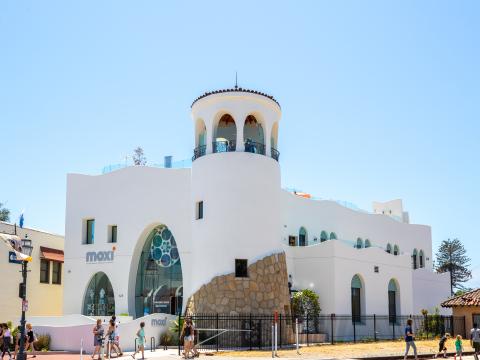
Robin Gose has been a STEM educator for more than 20 years, in both classroom and museum settings. She joined the MOXI team in November 2017 during its inaugural year as Santa Barbara’s newest hands-on science museum and destination for families. In this role, she oversees the museum’s operations, finances, fundraising, outreach, and programming to ensure alignment with the organization’s mission, “to ignite learning through interactive experiences in science and creativity.” She also cultivates relationships with supporters, business and civic leaders, schools, community partners, media, and more to further promote MOXI as a world-class institution for informal science learning.
Robin came to MOXI after three years as director of education at Thinkery in Austin, Texas where she cultivated the pedagogical vision of the institution and oversaw all programming, exhibits and facilities at the latest iteration of what was once the Austin Children’s Museum. Robin’s passion is to make science fun for young learners to promote their social, cognitive, and emotional development. She values providing authentic learning experiences for children to explore the world around them, with an emphasis on making science accessible to children from diverse backgrounds.
She earned her bachelor’s degree in geography and environmental resource management from the University of Texas, Austin. Robin began her career managing summer camps at the Austin Nature and Science Center before moving to Los Angeles to oversee programs at the California Science Center. She then transitioned to teaching K-5 science at an independent school in Los Angeles. During this time, she earned a doctorate degree in educational leadership from the University of California, Los Angeles, where her academic research focused on English language learners’ experiences in science classrooms.
Robin is an active volunteer in the Santa Barbara community, serving on the boards of Visit Santa Barbara and Downtown Santa Barbara as well as the Santa Barbara Botanic Garden’s Education Committee. She also serves on subcommittees for the Association of Children's Museums, the Association of Science and Technology Centers, and has been a grant proposal reviewer for the Institute of Museum and Library services for almost a decade.
Presented at Pratt Institute’s Manhattan Gallery and curated by Ellen K. Levy, a multimedia artist, scholar, and past president of the College Art Association, “From Forces to Forms” explores the nature of form by engaging with the potent forces and processes of nature. By investigating how physical laws shape living and nonliving forms alike — ideas first proposed by D’ Arcy Thompson in his classic tome “On Growth and Form” (1917) — the exhibition explores universal principles of organismic development while delving into the flux and perturbations that characterize life today.
Reflecting Pratt Institute’s commitment to interdisciplinarity, “From Forces to Forms” features works by 19 artists and designers whose practices draw from both art and science and articulate a shared commitment to creating a more sustainable world. These works consider the implications of form generation through a variety of media (from analog to digital), at different scales (from subatomic to macroscopic), and in varied contexts (from prebiotic to ecosystems).
First Episode "Laws of Nature" will feature:
Tauba Auerbach
Adam Brown and Robert Root-Bernsteir
Todd Siler
Paul Thomas
Meredith Tromble
The first section of the exhibition is composed of works by artists who explore basic forces of nature and the behavior of entities that are often placed, unattended, in the background. The artists emphasize the activation of life, often constructing their own methods. Like Thompson, they look at the intersection of physics and chemistry. probing the boundaries between the animate and inanimate, and they consider the available sources of energy to initiate the transition. The late chemist Robert Shapiro, who embarked on a lifelong search for life's origins, pointed to the necessary conditions: "You need a compartment, you need a source of energy, you need to couple the energy to the chemistry involved, and you need a sufficiently rich chemistry to allow for this network of pathways to establish itself. Having been given this, you can then start to get evolution.'
LASER talk as a part of the Medicine + Media Arts series
Integrating Science and Art to look Beyond the Limits of our Perception
Featuring Medicine + Media Arts Board Members: Bianka Hofmann, with special guests Barney Steel from Marshmallow Laser Feast and Elí Joteva.
The Medicine + Media Art Initiative is a multi-layered artistic and scholarly endeavor that serves as a national and international hub for the artistic exploration of contemporary medical science and biotechnology. The fellowship will act as a conduit for advancing new projects and artistic research that reimagine the medicalized body, corporality, notions of embodiment, posthumanism, and the effects of our environment on our sense of bodily presence and well-being in the world.
New advances in medicine, transgenics, and biomechtronics have generated genetically-modified “superhumans,” cyborg fantasies, and new evolutionary futures in the fields of art and medicine and also the cultural imaginary. Whether participating in bio-elective surgeries, performative dissections, or experimenting with invasive genetic editing, manipulations of the human form summon Mary Shelley’s cautionary tale, which serves as a metaphor for our darkest fears involving human evolution and knowledge. This event will feature four subject experts on the spectacular body in art and medicine. Transhumanist artist, Stelarc, who has used himself as an experimental canvas for exploring alternate anatomies, will discuss the obsolete body and its potential for technological alteration. Scholar, author, and medical historian, Rebecca Messbarger will respond to these notions, and also discuss increasing scientific analysis of criminal and saintly bodies via dissection in the Early Modern period. MD, surgeon, and medical ethics specialist, Piroska Kopar will also respond to the ethics of bio-elective surgeries in contrast to the delivery of acute care surgery. Siddharth Ramakrishnan will respond from the perspective of neuroscience....
The Art|Sci Center is excited to announce the launch of a new initiative that bridges the fields of medicine and media art. The Medicine + Media Art Initiative is a multi-layered artistic and scholarly endeavor that serves as a national and international hub for the artistic exploration of contemporary medical science and biotechnology. The fellowship will act as a conduit for advancing new projects and artistic research that reimagine the medicalized body, corporality, notions of embodiment, posthumanism, and the effects of our environment on our sense of bodily presence and well-being in the world.
In a time of pandemic conditions, the exchange between media art, medicine and the medical humanities in particular foregrounds the critical role of art practice in negotiating the human experience. And while medical science has evolved over time in culturally specific ways that are not value-neutral, media art and its related discourse have advanced the social, ethical, and humanistic investigation of medicine. Embedded in this network lies the interconnected categorizations of gender, race and class—intersectionality—as media art and medicine explore the corpus and its hidden landscape under the skin.
Through lectures, exhibitions, symposia, and the production of original creative work, The Medicine + Media Art Fellowship will bring together various collaborative partners that include: UCLA’s Art|Sci Center, the California NanoSystems Institute, and School of Medicine; the Sam Fox School of Visual Art, the School of Medicine, the Institute for Public Health, and Medical Humanities at Washington University in St. Louis; Fraunhofer Institute for Digital Medicine MEVIS, Bremen, Stuttgart; Angewandte University of the Arts, Vienna; Ars Electronica; Leonardo/International Society for the Arts, Science and Technology (ISAST); Society for Literature, Science and the Arts (SLSA); and Inter-Society for Electronic Arts (ISEA).