María Antonia González Valerio, Polona Tratnik, Ingeborg Reichle, Claudia Schnugg
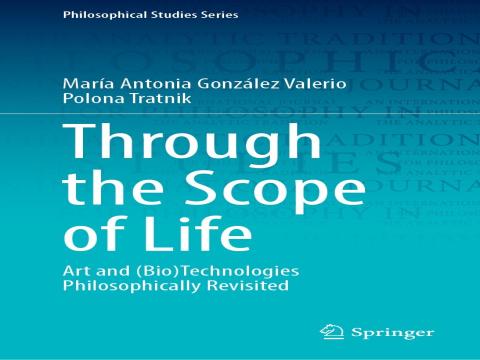
Join us for a panel discussion featuring María Antonia González Valerio, Polona Tratnik, Ingeborg Reichle, and Claudia Schnugg as they explore the themes and insights of "Through the Scope of Life: Art and (Bio)Technologies Philosophically Revisited," a book co-authored by María Antonia González Valerio and Polona Tratnik.
This book offers intriguing philosophical inquiries into biotechnological art and the life sciences, addressing their convergences as well as their epistemic and functional divergences. Rooted on a thorough understanding of the history of philosophy, this work builds on critical and ontological thought to interpret the concept of life that underscores first-hand dealings with matter and experimentation. The book breaks new ground on the issue of animality and delivers fresh posthumanist perspectives on the topics addressed. The authors embark on a deep ontological probe of the concept of medium as communication-bridging and life-bearing. They also take on the concept of performativity as biotechnological art.
The book includes concrete, well-documented case studies and shows how certain narratives and practices directly impact ideas surrounding science and technologies. It will interest philosophers in art and technology, aesthetics, ontology, and the life sciences. It will also engage art practitioners in art and science, curators and researchers.
-----
María Antonia González Valerio holds a PhD in Philosophy. She is a full-time professor at the Faculty of Philosophy and Literature at the National Autonomous University of Mexico (UNAM). Her academic pursuits are situated within the intersection of ontology and aesthetics, as well as the interdisciplinary realm of arts, sciences, and humanities, with a specific focus on art involving biomedia. As the director of the Seminar Arte+Ciencia, she facilitates collaborative engagements between artists, academics, and scientists, fostering interdisciplinarity that yields graduate education, specialised theoretical research, artistic creations, and exhibitions. Additionally, she is a curator and the driving force behind the artistic collective Bios ex Machina. She is the author of the books (selection): Through the Scope of Life. Art and (Bio)Technologies Philosophically Revisited (Springer, 2023), Cabe los límites: Escritos sobre filosofía natural desde la ontología estética (México: UNAM/Herder, 2016), Un tratado de ficción (México: Herder, 2010), and El arte develado (México: Herder, 2005).
Polona Tratnik holds a PhD in philosophy. She is full professor at the Faculty of Arts at the University of Ljubljana and senior researcher at the Institute IRRIS for Research, Development and Strategies of Society, Culture and Environment, where she leads a project on political functions of folktales. Her recent publications include: Art as Capital: The Intersection of Science, Technology, and the Arts (Rowman & Littlefield, 2021) and The European Avant-Garde – A Hundred Years Later (ed., Brill, 2024).
Ingeborg Reichle is a Berlin-based contemporary art historian and curator at the intersection of art and technoscience. In 2004 she gained her Ph.D. from the Humboldt University Berlin with the dissertation Art in the Age of Technoscience: Genetic Engineering, Robotics, and Artificial Life in Contemporary Art (Springer 2009). In recent years she served as Full Professor in the Department of Media Theory at the University of Applied Arts in Vienna, Austria, and as founding chair of the Department of Cross- disciplinary Strategies (CDS), where she designed an integrated BA study program on applied studies in art, science, philosophy, and global challenges. Recent curatorial projects include the sci-art program NaturArchy at the Joint Research Centre (JRC) in Ispra, Italy, the European Commission’s science and knowledge service and the sci-art program NanoARTS by the Swiss Arts Council Pro Helvetia. In 2022 she joined the Board of Trustees of the ZKM Center for Art and Media Karlsruhe and since 2023 she serves on the Board of Trustees of Fritz and Trude Fortmann Foundation for Building Culture and Materials.
Dr. Claudia Schnugg is curator and artscience scholar based in Austria. Her ongoing practice in the field of art and science is twofold: as scholar she is researching artscience collaborations, investigating effects and impact of such art-science exchange on actors, organizations involved and the relevance of the outcome. In 2019 she published her book Creating ArtScience Collaborations with Springer/Palgrave Macmillan. ArtScience programmes she curates at institutions such as European Space Agency/ESTEC, Helmholtz Center München, the EC funded ITN network RepliFate, BIFOLD at TU Berlin, and Resonances IV “NaturArchy” of the SciArt Project at the Joint Research Center of the European Commission in Ispra. Most recent exhibitions are CORALS – Marco Barotti (Berlin, 2023), Intersecting Realities (Timisoara, 2023), Cosmic Elements: Star-Pacing Songs (Beijing, 2023), Cosmological Elements (Shanghai, 2022). Claudia is member of international juries for art prices, residency projects, and scientific boards for artscience projects.
Rooted on a thorough understanding of the history of philosophy, this work builds on critical and ontological thought to interpret the concept of life that underscores first-hand dealings with matter and experimentation. The book breaks new ground on the issue of animality and delivers fresh posthumanist perspectives on the topics addressed. The authors embark on a deep ontological probe of the concept of medium as communication-bridging and life-bearing. They also take on the concept of performativity as biotechnological art.
The book includes concrete, well-documented case studies and shows how certain narratives and practices directly impact ideas surrounding science and technologies. It will interest philosophers in art and technology, aesthetics, ontology, and the life sciences. It will also engage art practitioners in art and science, curators and researchers.
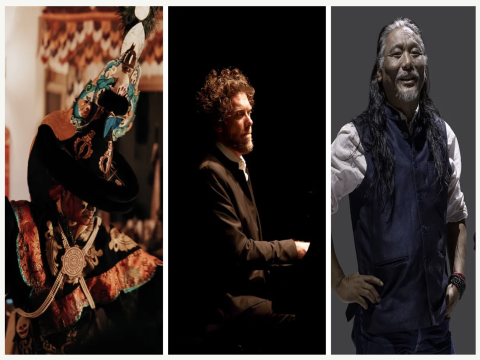
Image credits: Tenzin Choegyal. Photo courtesy of the artist
Simone Giuliani (photo 1). Photo by Marlon Krieger
Simone Giuliani (photo 2). Photo courtesy of the artist
Tsering Dorjee Bawa. Photo by Sej Saraiya
‘If the doors of perception were cleansed, every thing would appear to man as it is, infinite.’ – William Blake
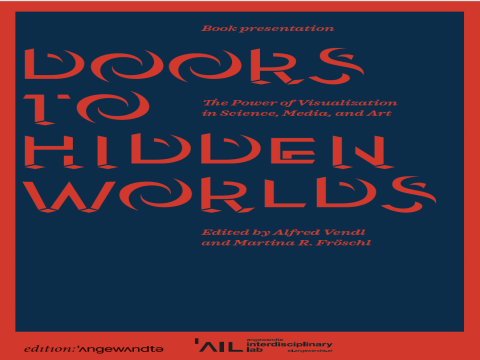
The visualization of often encoded data is making new, previously hidden but nevertheless real worlds accessible to humankind. Art is taking up this new knowledge and transferring it into new dimensions through visualization.
This book brings together a wide spectrum of contributions on visualization in science, media, and art: notable experts and associates of the Science Visualization Lab at the University of Applied Arts Vienna present outstanding examples of innovative visualization and provide insight into their working methods. This publication gives insight into the ways of thinking and working of well-known scientists, media experts, and artists; an opulent publication with numerous illustrations and augmented-reality features
The publication features "Nano: Bottom Up and In Between" an essay by Dr. James Gimzewski and Dr. Victoria Vesna.
Edited by Alfred Vendl and Martina R. Fröschl, Science Visualization Lab, Digital Arts, University of Applied Arts Vienna
Welcome: Gerald Bast, Rector of the University of Applied Arts Vienna
Book presentation:
Alfred Vendl and Martina R. Fröschl
This English-language publication appears with De Gruyter in the Edition Angewandte book series of the University of Applied Arts Vienna.
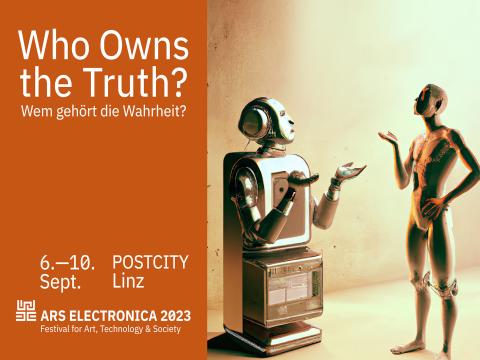
The Next Renaissance panel discussion is set for Friday, September 8, 2023, 12-1 pm CET, and will be a featured conversation moderated by Victoria Vesna at the Ars Electronica Festival in Linz, Austria.
Chair:
Victoria Vesna (US)
Victoria Vesna is an Artist and Professor at the UCLA Department of Design Media Arts and Director of the Art Sci center at the School of the Arts & Architecture and the California NanoSystems Institute (CNSI). At the UCLA Art Sci center, she organizes and hosts events and is busy co-curating with Anuradha Vikram Atmosphere of Sound: sonic arts in times of climate disruption for the Getty PST: Art X Science and is writing a book entitled: Vibrations Matter: Art & Science of Deep Listening (2024).
Speakers:
Lucia Ronchetti (IT)
Born in Rome in 1963, Lucia Ronchetti is a composer dedicated to music theater projects. In 2023, the opera Das fliegende Klassenzimmer made its debut at the Deutsche Oper am Rhein, the Staatsoper Hannover produced the chamber opera Pinocchios Abenteuer and the choral opera Chronicles of Loneliness was premiered at the the ACHT BRÜCKEN in Köln. Two new opera productions will be presented in 2024, Searching for Zenobia for the Münchener Biennale/Staatstheater Braunschweig and Der Doppelgänger for the Schwetzinger SWR Festspiele/ Staatstheater Luzern.
John Palmesino (IT)
John Palmesino is an architect and urbanist. Together with Ann-Sofi Rönnskog he is the founder of Territorial Agency, an independent organisation that combines contemporary architecture, science, art, advocacy and action. Recent projects include Plan the Planet, Sensible Zone, Oceans in Transformation, the Museum of Oil and Anthropocene Observatory. They are chief-curators of the Lisbon Triennale 2025. Territorial Agency are the recipients of the STARTS 21 Grand Prize of the European Commission honouring innovation in technology, industry and society stimulated by the arts.
Rachel Armstrong (IE)
I am ZAP (independent) professor of Regenerative Architecture at KU Leuven and co-ordinator for the “Microbial Hydroponics” EIC Pathfinder Challenges project. I am Vice Chair of Supervisory Board of the EIT C&C and a Senior TED Fellow. I develop an approach for the design of applications for next generation sustainable, or “regenerative” architecture that exists at the intersection of design, architecture, science & ecology
Alistair Hudson (GB)
Alistair Hudson is the Scientific-Artistic Chairman of the ZKM | Center for Art and Media Karlsruhe since April 1, 2023. Hudson is a curator and museum director with broad-ranging international experience. He combines contemporary curatorial expertise with a profound knowledge of the relationship between art, technology and society. From 2018 to 2022 he served as director of two museums in Manchester: the Manchester Art Gallery and The Whitworth. The latter is the art museum of the University of Manchester, where he was also Professor of Useful Art. Alistair Hudson’s concept of a »useful museum« envisions artistic and cultural institutions as centres of social responsibility and transformation.Together with the artist Tania Bruguera he heads the international network Asociación de Arte Útil.
Franz Giessibl (DE)
Franz Giessibl was born in 1962 in Amerang, a small town in Bavaria, Germany. In1991, he finished his PhD work in experimental physics with Nobel Laureate and nanoscience pioneer Gerd Binnig. He then moved to Sunnyvale, California to work with Park Scientific Instruments, a manufacturer of atomic force microscopes as a director of vacuum products. In1995, he joined McKinsey&Company in Germany. While working as a management consultant, he established a laboratory in his home and invented the qPlus® sensor, an “eye” for the exploration of atoms and nanostructures that is used in hundreds of laboratories around the world today. In 2005, he obtained offers for chairs at the Universities of Bristol (UK) and Regensburg (D), establishing the Chair in Experimental Quantum Nanoscience at University of Regensburg in 2006. He is married to Birgit Giessibl, they raised two sons.
Charles Landry (DE/GB)
Charles Landry is the inventor of the Creative Bureaucracy concept and co-founder of the Festival in Berlin as well as the Creative City concept. He wrote a a series of nine short books including The Creative Bureaucracy; Psychology & the City,; The Digitized City: Influence & Impact; Cities of Ambition. See www.charleslandry.com. Charles helps cities assess their potential afresh. He sees himself as a ‚critical friend‘ to the cities he works with. He seeks to inspire, stimulate, challenge and facilitate. He combines a global perspective with an acute sense of what matters locally. He grounds ideas in practical projects.
The Hox Zodiac allows the human-audience to experience the shared history and potential of genetic diversity among animals. Here, the idea of the Hox gene as a binding element is introduced and the Chinese animal zodiac and dinner table as the structure / space for discussion is employed, allowing the format to build based on the audience interaction. In neuroscience this is the emergent property of network connections, where a simple array of neurons can give rise to complex behaviors through interactions and adaptations.
The Hox Zodiac Dinner is a performative culinary event. There will be 12 small courses served to the participants. The event draws parallels to universally shared genetics and the Chines Zodiac symbols. It is quiet and meditative. There will be participants in the performance, and the event is open to all viewers to share the experience.
This is the final event of the ART AS SOCIAL PRACTICE: Technologies for Change exhibition.
Marco Pinter creates artwork and performances which fuse physical kinetic form with live visualizations. He has a PhD in Media Arts and Technology from the University of California, Santa Barbara, and an undergraduate degree from Cornell University. His work integrating graphics with robotic sculpture is supported by grants from the Interdisciplinary Humanities Center, the Santa Barbara Arts Collaborative, and the UC Institute for Research in the Arts. He has exhibited artwork and performances at cities around the world, including Dubai, New York, Montreal, Tehran, Hong Kong, Anaheim, San Diego and Santa Barbara. Wired magazine’s online UK site published a feature on Pinter’s work that explores perception through kinetic sculpture and graphics. Pinter is a contributing author to The McGraw Hill Multimedia Handbook and The Ultimate Multimedia Handbook. He is an inventor on over 70 patents, issued and pending, in the areas of live video technology, robotics, interactivity and telepresence.
A native Minnesotan, Jamie fell in love with nonprofits at a young age through volunteer work. She continued to cultivate this passion in her role as Director of Service Learning Camps for Augustana, partnering with over ten nonprofits in the Twin Cities. In 2010 Jamie moved to Santa Barbara and worked in programs and development for the Turner Foundation. In her spare time, she volunteers at the Village after school program, the Fund for Santa Barbara's Youth Making Change Program, and Partners in Education. Jamie received her BA in studio art from Gustavus Adolphus and is currently pursuing her MBA at Antioch University while working at the Hudson Institute of Coaching. Jamie is also an active artist in Santa Barbara and enjoys working with mixed media and printmaking. She is excited to combine her passion for the arts and give back to the community through her board membership at The Arts Fund.
COLOR, LIGHT, MOTION is an online series featuring media artists and scholars in dialogue about artworks from the Bermant Collection of media and kinetic arts. Each featured presenter will discuss selected artworks in history and context and in relation to their own work and connections. This series is produced in collaboration with Harvestworks NY and the David Bermant Foundation.
Ellen K. Levy is a NY-based artist and writer. She was Past President of the College Art Association before earning her doctorate in 2012 from the University of Plymouth (UK) on art and neuroscience. She then served as Special Advisor on the Arts and Sciences at the Institute for Doctoral Studies in the Visual Arts. Her diploma from the School of the Museum of Fine Arts, Boston followed a B.A. from Mount Holyoke College in Zoology. Levy’s solo exhibitions include the New York and the National Academy of Sciences, and she was represented by Associated American Artists and Michael Steinberg Fine Arts (NYC). Her honors include an arts commission from NASA, an AICA award, and a Distinguished Visiting Fellowship at Skidmore College. She has lectured, taught, and published widely, locally and internationally, on art and complex systems. With Patricia Olynyk she co-directs the NY LASER.
“We’re all part of this swirl of change [..], and it’s very human.” Join us this week for a discussion with Monica C. LoCascio in her new studio space, surrounding her MA thesis - OUR BODY IS OUR ANCHOR TO THE PRESENT, an exploration of the epigenetics of trauma through sensation and the materiality of embroidery and biomaterials. Vesna and LoCascio discuss the impetus of the work and LoCascio expresses how she found rest, reflection, and meditation in this work during the events of the past year. This important work reflects the changing tides of our world over the past year, bringing together trauma and healing, body and spirit, rest and reflection.
Monica C. LoCascio is a mixed-media artist exploring the inherent powers of the body, energetic phenomena, and non-human biomaterials in their capacity to challenge established knowledge hierarchies. Informed by her own occult ritual practice and inspired by theoretical quantum physics, somatic trauma studies and therapies, and inclusive philosophy, her work arrives as artifacts of her material and theoretical research.
LoCascio’s work has been shown at the Museum of Natural History of Vienna, The Academy of Fine Arts Krakow, CERN, the Angewandte Innovation Lab and the Biennale Sessions at the Venice Biennale 2019. She recently completed her MA in Art & Science with distinction at the Universität für Angewandte Kunst in Vienna, Austria.
Heather Dewey-Hagborg with Sri Kosuri and Soraya de Chadarevian
November 16, 2018 at 6 p.m. on campus at the Experimental Digital Arts space at the Broad Art Center. MAPS + DIRECTIONS: ARTS EDA
Heather Dewey-Hagborg's most recent short film T3511 screening followed by a conversation with the artist and guest discussants Sri Kosuri and Soraya de Chadarevian. Presented by Fathomers in collaboration with Art|Sci Center.
Guest Professors Sri Kosuri Assistant Professor at UCLA in Chemistry/Biochemistry Departments Soraya de Chadarevian Professor in the Department of History and the Institute for Society and Genetics at UCLA
Bio
Heather Dewey-Hagborg is a transdisciplinary artist and educator who is interested in art as research and critical practice. Her controversial biopolitical art practice includes the project Stranger Visions in which she created portrait sculptures from analyses of genetic material (hair, cigarette butts, chewed up gum) collected in public places.
Heather has shown work internationally at events and venues including the World Economic Forum, the Shenzhen Urbanism and Architecture Biennale, the Van Abbemuseum, Transmediale and PS1 MOMA. Her work is held in public collections of the Centre Pompidou, the Victoria and Albert Museum, and the New York Historical Society, among others, and has been widely discussed in the media, from the New York Times and the BBC to Art Forum and Wired.
Heather has a PhD in Electronic Arts from Rensselaer Polytechnic Institute. She is an artist fellow at AI Now, and an affiliate of Data & Society.
She is also a co-founder and co-curator of REFRESH, an inclusive and politically engaged collaborative platform at the intersection of Art, Science, and Technology.