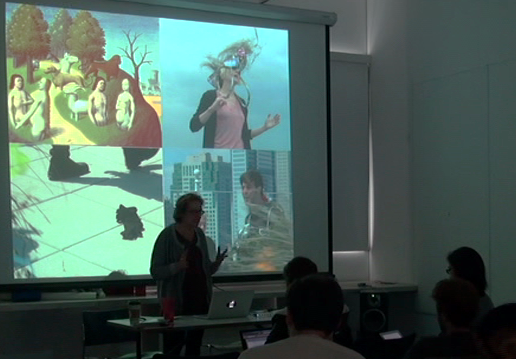
Toni Dove will demo interactive elements from several projects using video motion sensing to control projected video. Followed by a Leonardo Art Science Evening Rendezvous.
BIO
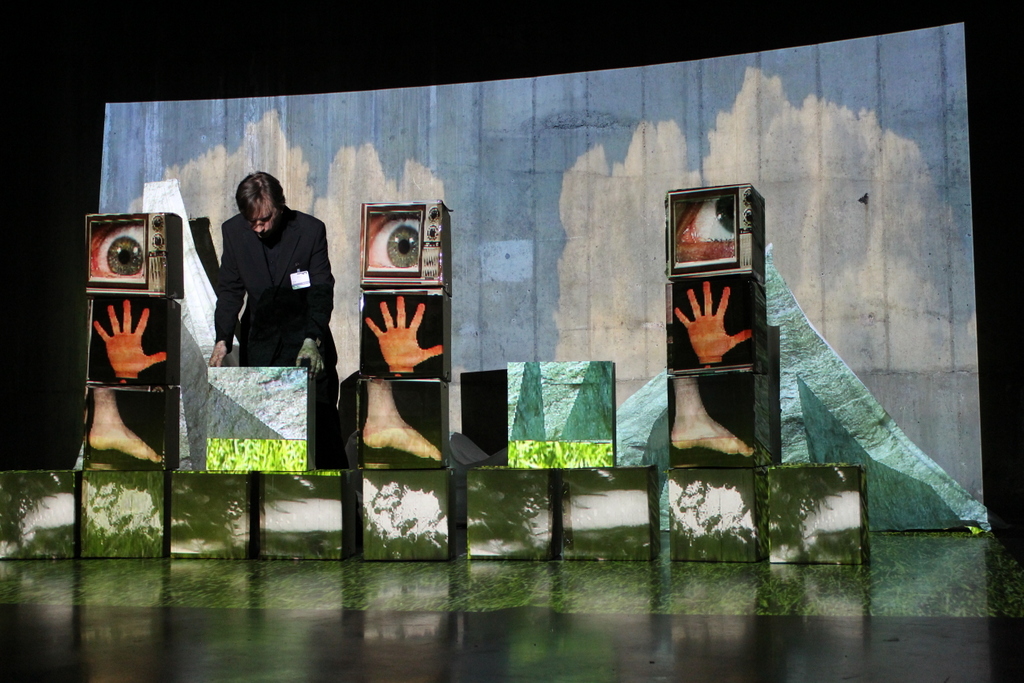
Considered one of the pioneers of interactive cinema, New York-based artist Toni Dove creates unique hybrids of film, installation, experimental theater and gaming. Participants interact with video, using motion sensing and other embodied interface strategies to “perform” on-screen avatars. Major projects include: Artificial Changelings, an interactive cinema installation in which viewers navigate between two centuries, debuted at the Rotterdam Film Festival, 1998, Spectropia, a feature length live-mix movie performance for two players debuted 2008 Wexner Center, Lucid Possession, a live mix video performance with multiple robotic screens and musical performers, premiered Roulette, NYC, 2013. The Dress That Eats Souls, a robotic cinema installation is currently in development and will premiere at a retrospective of Dove’s interactive work at the Ringling Museum in Fla., 2018
2000/2003 – Dove served on a Government Advisory Committee on Information Technology and Creativity, Computer Science and Telecommunications Board, National Research Council, USA.
Grants and awards: Rockefeller Foundation, the Greenwall Foundation, the Langlois Foundation, New York State Council on the Arts, National Endowment for the Arts, New York Foundation for the Arts, The LEF Foundation, MediaThe Foundation, and the Eugene McDermott Award in the Arts from M.I.T.
DEMO
Dove will demo interactive elements from several projects using video motion sensing to control projected video. Participants will move a characters body onscreen with their own movement, experience a video puppet that lip-synchs live to their voice, and explore the interactive narrative vocabulary of an installation that allows them to navigate between two characters - one in the 19th century and one in the future.
TUESDAY, 2/2/2016
2-8pm
Broad Art Center, Room 4230
Digital Artist Alex May (UK) presents his video mapping workshop: “Painting With Light”
in Lecturer Refik Anadol’s Motion Class, co-sponsored by the Art|Sci Center.
Alex May's words on his workshop:
"As part of my art practice I developed my own video mapping software (called Painting With Light), designed primarily for myself, but secondarily to be an accessible route into using the technology for artists who don't necessarily have any prior experience of working with mapping, projectors, or even particularly extensive digital skills.
Originally released in 2012, I've used it for many of my installations and live performances - including a 75 minute show at Tate Modern, London. During this time I've continued to develop the features of the software, and have run many workshops in various countries to introduce the software and processes; to share enough so that participants are able to practically do video mapping and take it in the direction they're interested in."
UCLA Arts VAPAE and ART/SCI invite you to a Sound Bath - a healing experience facilitated by Ossie Mair, MA, LMFT
Monday, February 1, 2016 at 6pm
EDA, 1250 Broad Art Center, UCLA
Event is free and open to the public. Participation is limited - Reservations suggested.
The OM Rhythm Circles Sound Bath Experience is a journey of pure sound and vibration. It is called a sound bath because you are bathed in the healing vibrations of Gongs, Tibetan Singing Bowls, Didgeridoos, Hand Pan, and other gentle, relaxing instruments. You are immersed in sound, allowing it to vibrate away the negativity and tension in your body and mind, replacing them with positivity, peace and harmony. And because we all respond differently to similar stimuli, so too, each person will experience the sound bath in his or her own unique way.
Due to the demands of our daily lives, the increase in stress-related disease in modern society is a fact. Stress is like an over-amping of the nervous system, and has many contributors. Many external, as well as internal influences, such as the foods we eat, people we encounter, thoughts we think, sounds we hear, environments we move within, etc., have a proven, negative effect on our well-being. Therefore, the goal in all healing, meditative, and transformational pursuits is to restore the intrinsic state of balance within our body, and if possible, to effect this change on a cellular level.
Sound & music are nutrients for the nervous system. We are constantly being vibrated, on a cellular level, by heardand unheard sound frequencies. Sound is vibration that produces resonance and rhythm in our bodies, and touches us and influences our emotions like no other source of input or expression. The vibrational nature of the gongs, bowls and other instruments, triggers all cells of the body to resonate simultaneously in a most powerful & effective way. And so too, the sound bath experience will have an incredible and profound effect on your well-being.
During the Sound Bath, you will either lie on the floor (you should plan on bringing your own yoga mat or blanket, and/or pillows), or just sit comfortably in a chair and let the sounds envelop you. Most people close their eyes and let the music take them on a gentle and transformative journey. Typically, a state of deep relaxation is achieved, and some people even fall asleep. You should dress in comfortable clothing and be prepared for an exciting new experience.
Ossie Mair, Founder and Principal Facilitator of OM RHYTHM CIRCLES, is a Certified Drum Circle Facilitator, Actor andLicensed Marriage and Family Therapist in Los Angeles, CA.
This event is co-sponsored by the Visual and Performing Arts Education Program (VAPAE), the ART/SCI Center and the Department of Design Media Arts in the UCLA School of the Arts and Architecture.
LASER symposium featuring Anna Dumitriu (bio-artist), Alex May (digital artist) and Pratik Shah (biomedical engineer)
February 4, 2016 7-9pm
Presentation Space, CNSI 5th floor
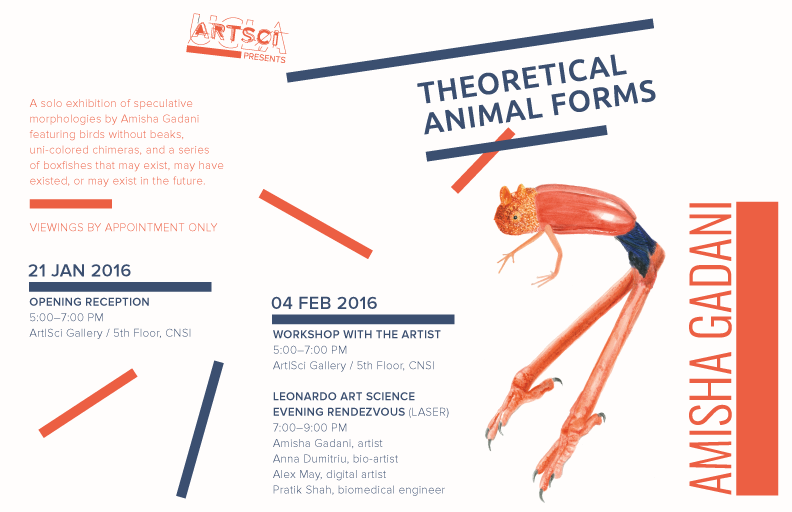
A solo exhibition of speculative morphologies by Amisha Gadani featuring birds without beaks, uni-colored chimeras, and a series of boxfishes that may exist, may have existed, or may exist in the future. The inspiration for the paintings and drawings in this exhibition stemmed partly from Gadani's two year artist residency in both the UCLA fish-focused evolutionary biology lab of Dr. Michael Alfaro and the UCLA Institute for Society and Genetics.
Bio:
Amisha Gadani is an artist, educator and illustrator based in Los Angeles. She is interested in unique animal morphologies and adaptations; from swarming behaviors and elegant defense mechanisms, to superorganisms and animals of the deep sea. Her work ranges from unsettling beak-less bird paintings and underwater videos to her on-going series of interactive animal-inspired defensive dresses that can, for example, inflate like a blowfish when the wearer is intimidated. She has spent over four years working at the art and science focused Exploratorium Museum in San Francisco in education, exhibits and illustration; and two years working at UCLA in two biology labs as an illustrator producing over fifty scientific illustrations featured in journals and research papers and as an outreach educator using drawing and sculpture focused workshops to explain scientific concepts to local elementary school students.
Her work has shown in Los Angeles, San Francisco, Seattle, Pittsburgh, New York City, and Tokyo; has been featured in The New York Times, Fast Company, and Scientific American; and has been published in LIMN magazine, the journal Method Quarterly and the book "Future Fashion: Innovative Materials and Technology" by Barcelona-based maomao publications.
Amisha earned a B.F.A in Fine Arts from Carnegie Mellon University in 2007.
Jason Fahrion, Fasih Ahsan with UCLA IGEM, and Mick Lorusso
October 22, 2015
Workshop | 5-7pm
UCLA Art|Sci Gallery
5th Floor, California Nanosystems Institute
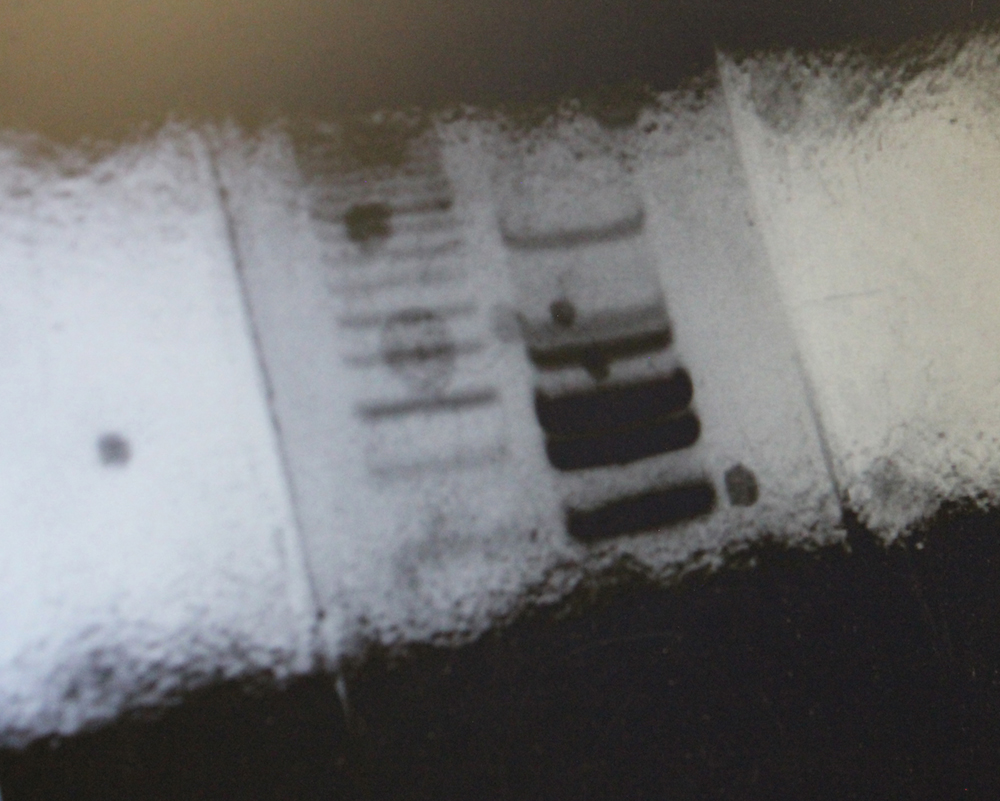
Through the projects of artist Jason Fahrion, who raises silkworms in his garage on local mulberry leaves, and the experiments of UCLA iGEM to genetically engineer unique types of silk for medicine and design, Seres Makers of Silk introduces participants to the processes involved in the production and transformation of silk. We will physically examine and compare silk samples from the lab and studio, while also watching live silk worms and learning how IGEM spins synthetic silk. And by listening to data sonification of DNA sequences from different organisms including spiders and silkworms, we will consider the possibilities and difficulties in genetically engineering silk for future applications.
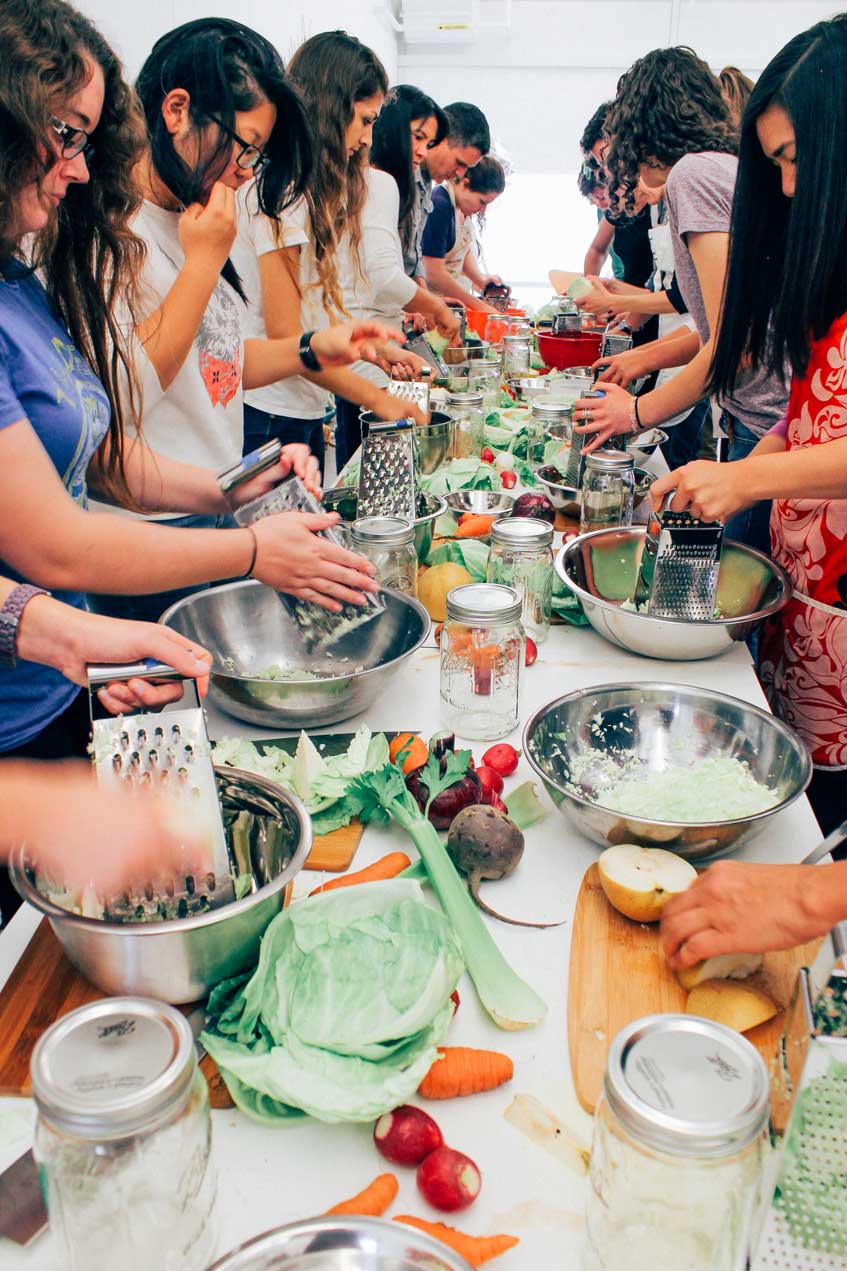
The OS Fermentation Workshop (OSFW) was part of artist duo Leila Nadir and Cary Peppermint’s Edible Ecologies project—a series of “social sculptures” that worked collaboratively with local communities (human, bacterial and ecological). Taking place thus far at community gardens, academic institutions and public spaces, the OS Fermentation workshop involved participants in a process of reviving the ancient practice of fermentation as an alternative to industrial methods of food preservation such as refrigeration and pasteurization. It functioned simultaneously as a slow-cooking class, a community-building ritual and a conceptual art experiment in which both wild bacteria and food democracy are the core concepts. The tangible outcome for participants was jars of fermented veggies, which the artists envision as an unfinished and interactive artwork.
Leila Nadir and Cary Peppermint (collectively called EcoArtTech) are a hybrid artist-scholar team whose environmental art projects take the form of architectural interventions and urban wilderness tours, net art and public performances, scholarly articles and poetic essays. This workshop focused on positioning art as an urgent and critical social intervention operating between utility and imagination.
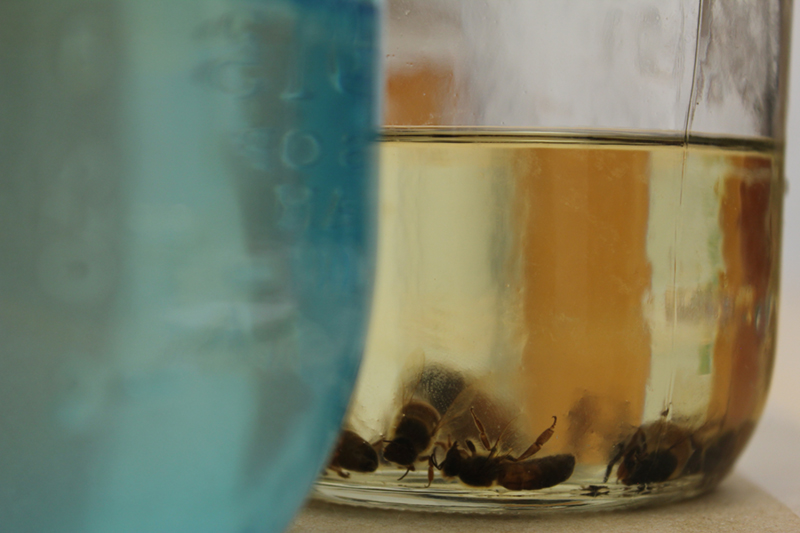
In Jason Fahrion's workshop on bee biology and the production of mead, participants sampled about six different excellent honey varieties, which were compared to a honey flavor wheel he helped develop at UC Davis. Fahrion also described his experience as a beekeeper and explained how the Varroa Destructor mite has been invading most honey bee colonies, contributing largely to Colony Collapse Disorder. Participants also considered the history of mead, humankind's earliest fermented beverage, which involves a collaboration with both bees and microbes in its production.
Iain Kerr presents EATING PLACE, an Urban Foraging Workshop
5 -7 pm | Thursday, March 12th
7-9 pm | LASER
UCLA Art|Sci Gallery
5th Floor, California nanoSystems Institute
A workshop led by visiting artist Iain Kerr, of SPURSE Design Consultancy, EATING PLACE is an initiative to foster large scale social and ecological transformation by developing alternative practices of place, the commons, multi-species actions, and urbanism. EATING PLACE begins by understanding place as a mode of being-of-a-world and not simply a geographic location. This being-of-a-world necessarily extends beyond us to include the very active participation of plants, animals, histories, technologies, ideas, other worlds and practices in a collective act of cosmological place co-making.
Iain Kerr is a socio-ecological systems designer, and founding member of the transdisciplinary research and design collaborative SPURSE. Their work has been at the forefront of experimental ecological research and design for over the last decade. While developing ground breaking practices, projects and events at the intersections of art, design, ecology and urbanism they have collaborated with communities from the high arctic to the inner cities in Bolivia (via projects ranging from restaurants, to wetlands to micro-biology laboratories) to effect real change. In addition to working with SPURSE and co-directing SPURSE’s Emergent Futures Lab, Iain holds faculty appointments at the University of Maine (Associate Professor of Critical Engagements), and Montclair State University (Director of Creative Practices, Feliciano Center). He teaches, lectures and gives workshops widely (including Harvard University, Columbia University, Parsons, University of Maine, CCA, and RISDI). His work, and that of SPURSE, has been exhibited internationally (Whitney Museum of Art, The Guggenheim. Grand Arts, CAFK+A, Indianapolis Museum of Art, Mass MoCA) and published in a number of books and journals including: The Interventionists, The Object of Labor, Experimental Geography, The International Encyclopedia of Human Geography, Surface, ID, NY Times, Elle, Teme Celeste, Art Papers, Monitor, Interior Design, and Art Journal.
SPURSE is a creative design consultancy that focuses on social, ecological and ethical transformation. It works to empower communities, institutions, infrastructures, and ecologies with tools and adaptive solutions for system-wide change. Drawing upon the diverse backgrounds of its members that spans the fields of science, art, and design, they utilize unique immersive methods to co-produce new ecologies, urban environments, public art, experimental visioning, strategic development, alternative educational models, and expanded configurations of the commons.
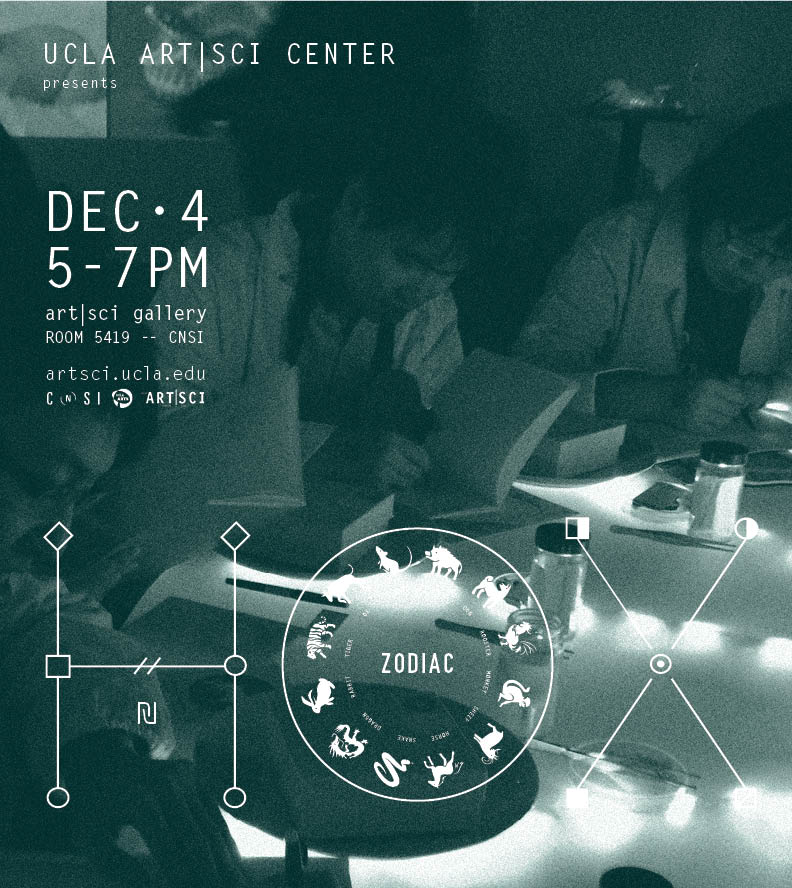
HOX ZODIAC DINNER (BETA) Victoria Vesna and Siddarth Ramakrishnan
04 DECEMBER 2014
CNSI ART|SCI GALLERY
Hox Zodiac Dinner is an on-going collaboration between Art|Sci director Victoria Vesna and neuroscientist Siddharth Ramakrishnan. Inspired by the Hox genes which codify body plans across the animal kingdoms, Hox Zodiac offered the audience a seat at the dinner table, enabling conversations on mutations, morphology, and metamorphosis, on humans in relation to animals and the food we eat, on animals feral and laboratory raised. This first-ever iteration of the participatory project aimed to heighten consciousness about our animal bodies, mutations, art, and science.
A free WORKSHOP led by visiting artist LENORE MALEN
Art|Sci Gallery, CNSI 5th Floor
May 22nd, 4 - 6:50 p.m.
An installation with multichannel projections and live performance that explores human and animal entanglements, reversing the roles of humans and animals. Scenes include an eerily human raven song and dance, an address to the UN General Assembly and a Socratic dialogue featuring a cast of animals performing as writers and philosophers.
Learn more about Malen's work on her website and blog.



.jpg)
.jpg)
.jpg)
.jpg)