Genetics

Image: 
Date for Content + Calendar: 
Thursday, 4 February 2016 - 7:00pm
Exhibitors / Artists: 

AMISHA GADANI / ANNA DUMITRIU / ALEX MAY / PRATIK SHAH / KATHY HIGH


Leonardo Art Science Evening Rendezvous
February 4, 2016 7-9pm
Presentation Space, CNSI 5th floor

Live Stream:


Confirmed Speakers:

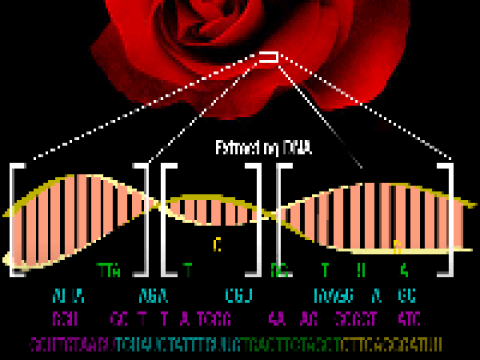
ANNA DUMITRIU (artwork pictured above) is a British artist whose work fuses craft, technology and bioscience to explore our relationship to the microbial world. She is artist-in-residence on the Modernising Medical Microbiology Project at the University of Oxford and exhibited at venues such as the V&A Museum, London and The Picasso Museum, Barcelona. She has recently undertaken a residency in the Liu Lab for Synthetic Evolution at University of California Irvine. www.normalflora.co.uk

ALEX MAY is a British artist exploring a wide range of digital technologies, most notably video projection onto physical objects (building on the technique known as video mapping or projection mapping by using his own bespoke software), also interactive installations, generative works, full-size humanoid robots, performance, and video art.
www.alexmayarts.co.uk

PRATIK SHAH earned his Ph.D. at the Center for Synthetic Biology of the University of Copenhagen, where he developed and applied a number of impressive technologies for detecting microRNAs. Pratik currently researches the biochemistry of orthogonal replication and explores its use for replicating XNA in the Liu Lab for Synthetic Evolution at University of California Irvine.

KATHY HIGH is an interdisciplinary artist working in the areas of technology, science, speculative fiction and art. She produces videos and installations posing queer and feminist inquiries into areas of medicine/bio-science, and animal/interspecies collaborations. She hosts bio/ecology+art workshops and is creating an urban nature center in North Troy (NATURE Lab) with media organization The Sanctuary for Independent Media. High is Professor of Video and New Media in the Department of Arts, Rensselaer Polytechnic Institute in Troy, NY. She teaches documentary and experimental digital video production, history and theory, as well as biological arts.
www.kathyhigh.com

AMISHA GADANI is an artist, educator and illustrator based in Los Angeles. She is interested in unique animal morphologies and adaptations; from swarming behaviors and elegant defense mechanisms, to superorganisms and animals of the deep sea. Her work ranges from unsettling beak-less bird paintings and underwater videos to her on-going series of interactive animal-inspired defensive dresses that can, for example, inflate like a blowfish when the wearer is intimidated. She has spent over four years working at the art and science focused Exploratorium Museum in San Francisco in education, exhibits and illustration; and two years working at UCLA in two biology labs as an illustrator producing over fifty scientific illustrations featured in journals and research papers and as an outreach educator using drawing and sculpture focused workshops to explain scientific concepts to local elementary school students. Her work has shown in Los Angeles, San Francisco, Seattle, Pittsburgh, New York City, and Tokyo; has been featured in The New York Times, Fast Company, and Scientific American; and has been published in LIMN magazine, the journal Method Quarterly and the book "Future Fashion: Innovative Materials and Technology" by Barcelona-based maomao publications. Amisha earned a B.F.A in Fine Arts from Carnegie Mellon University in 2007.
www.amishagadani.com

VICTORIA VESNA (artist and Director of the Art|Sci Center) presents her recent collaborative work on Birdsong Diamond Japan, created with Dr. Charles Taylor (evolutionary biologist, UCLA), Dr. Takashi Ikegami (physicist, Univ. of Tokyo), Dr. Hiroo Iwata (engineer, EMP), and EMP PhD students. Bird Song Diamond is an interactive installation based on long-term research (2011-present) allowing multifaceted, interdisciplinary perspectives — uniquely connecting the nodes of evolutionary biology, artificial intelligence, spatial sound, mechatronic art and interactive technologies.

Image: 
Exhibitors / Artists: 

Jason Fahrion, Fasih Ahsan with UCLA IGEM, and Mick Lorusso

October 22, 2015
Workshop | 5-7pm
UCLA Art|Sci Gallery
5th Floor, California Nanosystems Institute

Through the projects of artist Jason Fahrion, who raises silkworms in his garage on local mulberry leaves, and the experiments of UCLA iGEM to genetically engineer unique types of silk for medicine and design, Seres Makers of Silk introduces participants to the processes involved in the production and transformation of silk. We will physically examine and compare silk samples from the lab and studio, while also watching live silk worms and learning how IGEM spins synthetic silk. And by listening to data sonification of DNA sequences from different organisms including spiders and silkworms, we will consider the possibilities and difficulties in genetically engineering silk for future applications.

Image: 
Exhibitors / Artists: 

Kathy High

Lecture at UCLA Design and Media Arts:

6pm | Tuesday April 14th 
EDA , Room 1250

Bio-Artist KATHY HIGH will give a public presentation on her creative work in the emerging field of biological art, a field referred to as "bioart". She will introduce her influences and her interests and amazement with bio-art history. 

Kathy High is an internationally recognized, award winning interdisciplinary artist from New York currently working with living systems, animals, and biology and art. She produces videos, sculptures and installations around issues of gender and technology, pursues queer and feminist inquiries into areas of bio-science, science fiction, and animal studies.

Her works have been shown in festivals, galleries and museums nationally and abroad, including the Guggenheim Museum, Museum of Modern Art, Lincoln Center and Exit Art (NYC), the Science Gallery, (Dublin), NGBK, (Berlin), MASS MoCA (North Adams), Videotage Art Space and Para-Site Gallery (Hong Kong), Festival Transitio_MX (Mexico), among others. She has received awards for her works including grants from the John Simon Guggenheim Memorial Foundation (2010), the Rockefeller Foundation, the National Endowment for the Arts and the New York State Council for the Arts.

She has had artist residencies with SymbioticA, art and science residency at the University of Western Australia (2009-20), the Bioart Society of Finland, Helsinki and Kilpisjarvi, Finland (2013) and in Hong Kong with the Asian Arts Council (2005).

Her UCLA exhibition opening April 16 is Waste Matters: You Are My Future and explores immune systems as autopoiesis, capable of maintaining themselves, looking at research in fecal microbial transplants and gut biomes to better understand the important function of bacteria in our bodies. This project looks at the metaphor of interspecies love, immunology and bacteria as players.

Facebook Event Page

Image: 

Genetics + Aging Symposium
Hosted and organized by the Institute for Society and Genetics.

How do we age? Why do we age? Can we extend life greatly, or indefinitely? Scientists approach aging as a biological fact, or a technical problem to be solved; artists approach it as something moral and aesthetic, or as a crucial or inevitable dimension of society. Both disciplines are concerned with the genetic inputs for and the physical manifestation of aging. Here we plumb the intersection of biological science and artistic production to explore the “Art of Aging”– including both the artistic and scientific representations of growing older, and the process of adapting gracefully to aging as individuals and as a society.

The two-day symposium pursues our questions with a Friday evening (May 11) panel bringing leading scientists, artists, and historians together in discussion, and a Saturday (May 12) festival where attendees can explore over a dozen interactive artworks, presentations, and exhibits. This event also features an exhibition by Kathy Brew entitled "Going Gray", which opens on May 10. Going Gray looks at the seemingly frivolous aspect of dying/not dying one’s hair to explore questions about aging and current cultural attitudes towards the graying of America. The exhibition includes video clips from a documentary in-progress, photographs, and mixed media. 

Time:
All day

Location: California NanoSystems Institute @ UCLA

This event is free and open to the public. For more information and to register, please click here.
 

Photo credit: Wayne Barlowe


Lejla Kucukalic from the UCLA English Department will present a lecture on Biotech to Biopunk: Science Fiction’s Visions of Genetics.

Location: 4302 Rolfe Hall


Thursday, May 17, 2012

2:00 PM - 3:30 PM

For more event information, please click here.


Categories: 

The UCLA Center for Society and Genetics and The ACLU of Southern California present the panel discussion

Who Owns Your Genes?

Your Civil Liberties vs. Commercial Patenting of Human Genes

306 Royce Hall

(Reception to Follow)

Did you know that about 20 percent of human genes are patented? The U.S. Patent and Trademark Office (PTO) has granted thousands of patents on human genes. A gene patent holder has the right to prevent anyone else from studying, testing or even looking at a gene. As a result, scientific research and genetic testing has been delayed, limited or even shut down due to concerns about gene patents.

In May 2009, the National ACLU filed a first-of-its-kind lawsuit charging that patents on two human genes associated with breast and ovarian cancer are unconstitutional and invalid. The case was filed on behalf of researchers, genetic counselors, women patients, breast cancer and women's health groups, scientific associations of geneticists, pathologists, and laboratory professionals. The suit charges that the patents on these genes stifle diagnostic testing and research and limit individuals' options regarding their medical care. In March, a federal district court issued a landmark ruling invalidating the patents. The ruling is now on appeal.

Join us for a discussion of gene patents, their effects on science and patient care, and the litigation and other advocacy. Speakers include:

* Sandra Park: Staff Attorney for the ACLU Women’s Rights Project. Ms. Park is currently working on the lawsuit challenging the patents granted on two human genes associated with breast and ovarian cancer.

* Wayne Grody: M.D., Ph.D., Professor, UCLA School of Medicine Divisions of Medical Genetics and Molecular Pathology

* Deborah Heine: Attorney and Exec Director, Claire Altman Heine Foundation. Deborah Heine founded the Clair Altman Heine Foundation in memory of her daughter, Claire, who died of Spinal Muscular Atrophy, a genetic disease that involves a commercially patented gene.

* Debra Greenfield:  Attorney and Adj. Asst. Prof with the UCLA Center for Society and Genetics who has previously worked on cases dealing with the implications of gene patenting and tissue ownership.

Seating is Limited

To reserve a seat, RSVP at Darwin@socgen.ucla.edu or call (310)267-5471

Please contact Roland McFarland (rmcfarland@socgen.ucla.edu) for inquiries.


Hox Morph

Description: 

"I wonder if I've been changed in the night? Let me think: was I the same when I got up this morning? I almost think I can remember feeling a little different. But if I'm not the same, the next question is 'Who in the world am I?' Ah, that's the great puzzle!"
- Lewis Carroll, Alice in Wonderland, Ch.2
 
This interactive project is inspired by the properties of the Homeobox genes which essentially define body regions in all animals as well as humans. We seek to create and experiential space that relates the idea that we are all interconnected.
 

Image: 

Honors 177: Biotech and Art

Professor Victoria Vesna, Department of Design | Media Arts

Location: Broad Art Center, Room 5240

You are invited to view the final works of students who will give you another viewpoint on genetic manipulations of all kinds.

Image: 

"Animals + Genetic Technologies" Lecture + Symposium
14 OCTOBER 2005
EDA, UCLA ART|SCI CENTER

Can artists be trusted to act with integrity in the uncharted waters of their enthusiastic engagement with genetic technologies? Carol Gigliotti presented key ideas from her essay, “Leonardo’s choice: the ethics of artists working with genetic technologies.” The center of her argument grew out of an increasing concern, not only about the risks of genetic technologies, in general, but also with a growing genre of art practice involving genetic technologies and animals. She is joined by artists whose work center on issues dealing with biotechnology and animals, and scientists whose research involves work with animals. This symposium resulted in a special issue in the AI & Society journal, Springer- Verlag, UK. November 14, 2005
PARTICIPANTS: Carol Gigliotti (Emily Carr Institute in Vancouver, BC) / Taimie Bryant (UCLA School of Law) / Natalie Jeremijenko (Department of Visual Arts, UCSD) / Eduardo Kac (Department of Art & Technology, AIC) / Charles Taylor (Department of Ecology & Evolutionary Biology, UCLA) / Steve Best (Department of Philosophy & Humanities, University of Texas-El Paso) / Beatriz da Costa (Departments of Studio Art, Electrical Engineering & Computer Science, UCI). Moderated by Victoria Vesna.